
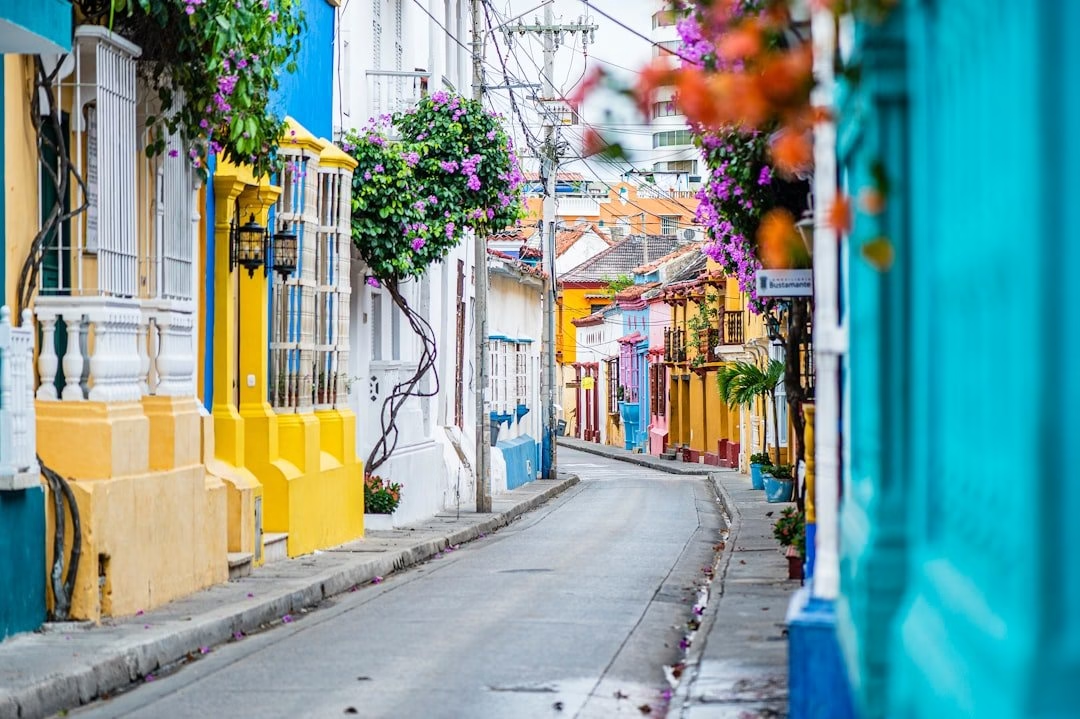
A City That Earns Its Reputation
Walk through the Puerta del Reloj at dusk and the old city announces itself immediately: bougainvillea spilling from second-floor balconies, the low groan of a cumbia bass from somewhere inside a courtyard, vendors pressing cups of fresh-squeezed maracuyá juice on anyone who slows down. The streets of Cartagena’s Centro Histórico are narrow enough that the buildings create shade most of the afternoon, and the heat — which sits around 90°F even in May — becomes almost manageable. For about three centuries, this was one of the wealthiest ports in the Americas. You can still feel the weight of that history in the walls themselves, some of them 40 feet thick.
Why Cartagena Is in the News Right Now
The timing of your interest in Cartagena matters. As of May 2026, the United States government has issued a formal travel warning for Colombia, citing rising crime and civil unrest, according to reporting by the New York Post. Al Jazeera’s coverage specifically frames Cartagena as a “tourist jewel plagued by violence,” noting that the city — long held up as a success story of Colombia’s transformation — is now dealing with security pressures that are reshaping daily life for residents and visitors alike.
This is not a situation to minimize. Armed groups have been blamed for extortion and targeted attacks in some neighborhoods. The problems are not uniform across the city, but they are real, and they are current. The sources cited here do not flag specific safety concerns about the walled city’s interior tourist corridors, but the broader urban context has deteriorated enough that the US government felt the warning was warranted. Anyone planning a trip should read the State Department advisory in full before booking.
That said, Cartagena continues to receive international visitors and has functioning tourism infrastructure. The goal here is not to talk you out of going — it’s to give you an accurate picture so you can make your own decision.
What to Know Before You Go
Cartagena sits on Colombia’s Caribbean coast, roughly 650 miles north of Bogotá. Rafael Núñez International Airport (CTG) is about 3 miles from the old city. Round-trip flights from several US cities are available in the $500–$600 range as of May 2026, according to Travel Noire’s rundown of cheap May flights. The Colombian peso is the local currency; US dollars are accepted at many tourist-facing businesses but at worse exchange rates than you’ll get at an ATM. Spanish is the working language — English is common in hotels and upscale restaurants, less so in markets and local neighborhoods.
The city divides roughly into three areas that matter for visitors. The Centro Histórico (the walled city) is the historic core — colonial architecture, the loudest restaurant scene, and most of the tourist accommodation. Getsemaní, just outside the walls, is a working-class neighborhood that has been heavily gentrified over the past decade; it has the best street food and murals, and also a more mixed security reputation at night. Further out, the Bocagrande district is a beach peninsula with high-rise hotels — functional but characterless, more Miami Beach than colonial Caribbean.
Climate in May: hot, humid, with a dry spell that makes it one of the better months to visit before the June–October rainy season kicks in. Temperatures average around 88–92°F. Book accommodation early — the old city’s smaller boutique hotels fill up.
What to Do in Cartagena
Walk the city walls at dawn. The murallas — the 11-kilometer defensive wall encircling the old city — are best before 8 a.m., when the tour groups haven’t arrived and the light is sharp enough to see the islands in the bay. The wall took nearly two centuries to complete and withstood repeated pirate attacks. Climbing up near the Baluarte de Santo Domingo gives you a view over the red-tiled rooftops and, on clear mornings, the distant haze of the Rosario Islands. It costs nothing to walk the wall.
Eat in Getsemaní. The neighborhood’s Plaza de la Trinidad becomes a street-food market most evenings — fritanga vendors frying patacones and chicharrón, older women selling arepas de choclo off portable grills. It’s loud and genuinely local in a way that the old city’s interior restaurants aren’t. Go before 9 p.m. and stay aware of your surroundings afterward; the neighborhood’s reputation after midnight is spottier.
Take a boat to Playa Blanca. The beach on Barú island, about 45 minutes by lancha from the Muelle de los Pegasos dock, is a long stretch of white sand with clear, warm water. It’s crowded on weekends — arrive before 10 a.m. if you want a spot without a vendor in your face every 10 minutes. Boats run roughly 40,000–60,000 Colombian pesos per person round-trip, though prices fluctuate. Bring your own food and water or expect to pay tourist prices on the beach.
Visit the Castillo de San Felipe de Barajas. The 17th-century fortress on the hill east of the old city is the largest Spanish-built fort in the Americas. The tunnel system underneath is genuinely interesting — the acoustics were engineered so that footsteps could be heard from any point in the network, an early warning system against infiltration. Entrance is around 35,000 pesos. Skip the guided tours offered at the gate; they’re rushed and expensive relative to what the signage inside already tells you.
Spend time in the Plaza Santo Domingo in the evening. This is the center of old-city social life — the square in front of the Church of Santo Domingo fills with locals and visitors sitting on plastic chairs, drinking beer, listening to live vallenato. The famous Botero sculpture of a reclining woman anchors the square. Drinks at the surrounding restaurants are overpriced; buy from the cooler vendors working the plaza itself and sit on the church steps.
What to Skip
The Rosario Islands day tours sold at every hotel front desk. For approximately 120,000–180,000 pesos, these tours pack 30-plus people onto a boat, rush you through 2 hours at a beach with a cash bar, and get you back by 4 p.m. The islands themselves are beautiful, but this format strips any pleasure out of them. If you want to see the Rosarios properly, book a private boat or stay overnight — otherwise, Playa Blanca on Barú gives you better sand and water for a fraction of the cost and hassle.
Also worth skipping: the tourist chiva bus party tours that leave from the old city walls most nights. They’re loud, they go nowhere interesting, and they’re priced for people who haven’t figured out yet that the city’s actual nightlife happens on foot.
Practical Notes
Security: Read the current US State Department advisory before traveling — as of May 2026, Colombia carries a Level 2 “Exercise Increased Caution” designation, per reporting from the New York Post. Al Jazeera’s coverage notes that violence in Cartagena has risen measurably. Avoid Getsemaní after midnight and don’t walk to or from Bocagrande after dark. Use registered taxis or apps like InDriver rather than street hails.
Visa: As of publication, US citizens do not require a visa for tourist stays up to 90 days in Colombia. Verify current requirements through the Colombian consulate before traveling — entry rules can change.
Cost level: Mid-range. Budget travelers can get by on $50–$70 per day staying in Getsemaní guesthouses and eating street food. Boutique hotels in the old city run $120–$250 per night. Round-trip flights from the US in the $500–$600 range are available as of May 2026, according to Travel Noire.
Best time to go: December through April is the dry season and peak tourist period. May is a reasonable shoulder-season compromise — fewer crowds, lower prices, still mostly dry. Avoid September and October if you’re sensitive to rain disrupting outdoor plans.
Ethical note: Cartagena has a significant population living in poverty alongside the tourism economy. Tipping service workers is meaningful here. Be direct but fair when negotiating with vendors — the haggling culture is real, but so is the margin these sellers are working with.