
The Island at Full Tilt
By seven in the morning, the harbor at Chania is already moving. Fishing boats nudge against the Venetian seawall, a man sells paper bags of warm koulouri from a cart near the lighthouse, and the first tour group of the day is already photographing the mosque that never quite became a mosque. The old town smells of brine and diesel and yesterday’s fried food. It is beautiful and a little chaotic, and by ten o’clock the narrow lanes will be impassable with wheelie luggage. This is Crete in 2026 — genuinely compelling, and genuinely crowded.
Why Crete Is Worth Watching Right Now
According to Travel And Tour World, Crete is emerging as one of Europe’s fastest-growing Mediterranean travel destinations in 2026, with visitor numbers climbing steeply after several years of post-pandemic rebound and increasing direct flight connections from northern Europe and North America. The growth is not evenly distributed — the northwest (Chania, Rethymno) and the central hub of Heraklion absorb the majority of arrivals, while the far east of the island, around Sitia and the Lasithi plateau, remains comparatively quieter.
The surge comes with a real tension. Local infrastructure, particularly in the old towns, was not built for this volume of foot traffic, and Cretan municipal authorities have been under growing pressure to manage hotel density and short-term rental saturation in historic neighborhoods. If you’re going in peak season — July and August — expect the most-photographed spots to be genuinely unpleasant between 10 a.m. and 5 p.m. The island functions better for travelers who plan around those hours.
What to Know Before You Arrive
Crete is Greece’s largest island, stretching roughly 260 kilometers east to west. It sits in the southern Aegean, closer to Libya than to Athens in distance, and that geography shapes the climate: summers are hot and dry, with July and August regularly hitting 35°C (95°F) or above in the interior. Spring (April–June) and autumn (September–October) offer far more manageable temperatures and noticeably smaller crowds.
Getting there: Heraklion’s Nikos Kazantzakis Airport (HER) is the main entry point and receives direct flights from dozens of European cities. Chania’s smaller airport (CHQ) serves western Crete and is worth checking for flights from the UK and Germany. Ferry connections run from Piraeus (Athens) overnight — a roughly 8-to-9-hour crossing — and provide a practical option if you want to combine Crete with mainland Greece.
Currency is the euro. Greek is the official language; English is spoken widely in tourist areas and increasingly in rural tavernas. Car rental is the most practical way to explore beyond the main towns — a compact car in shoulder season costs roughly $35–50 USD per day from established operators at the airports. Public buses (KTEL) connect major towns reliably and cheaply, with a Heraklion–Chania ticket running around €14 ($15 USD) one way.
What to Do: A Short List
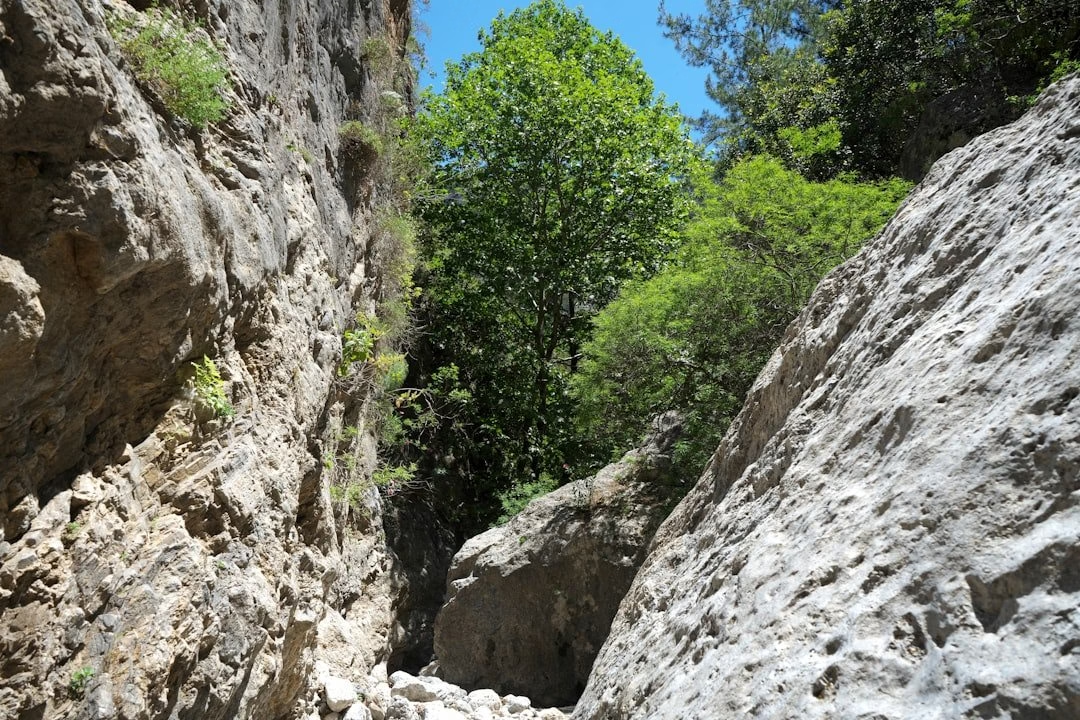
Walk the Samaria Gorge — but go early. The 16-kilometer gorge trail in the White Mountains is the island’s most dramatic natural experience: sheer limestone walls narrowing to a 3-meter gap called the Iron Gates, the smell of pine and wild thyme, the sound of the stream below your feet. The gorge opens in May and closes in October. An entry fee of €5 applies. The catch: it is extremely popular. Aim for the first bus from Chania (departing around 6:15 a.m.) to reach the trailhead at Xyloskalo before the trail fills up. The hike down to the coast at Agia Roumeli takes 4–6 hours; you return by ferry and bus.
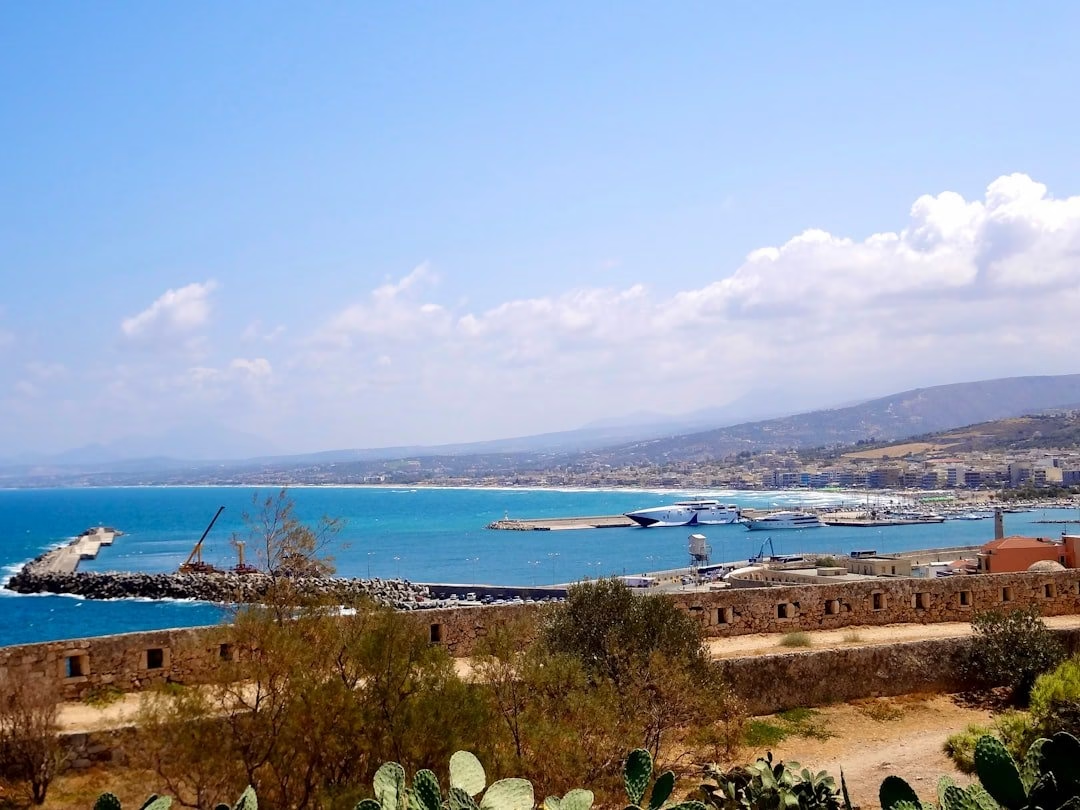
Spend a morning in Rethymno’s old town. Rethymno gets less attention than Chania, and the difference shows. The Venetian fortezza — a 16th-century hilltop fortress overlooking the harbor — is less mobbed than comparable sites to the west, and the lighthouse end of the harbor is functional fishing territory rather than a set piece for photographers. The covered market streets sell Cretan products (thyme honey, dried herbs, local olive oil) alongside the tourist kitsch; it takes about 30 seconds to tell which is which.
Eat in a village, not in a harbor-front restaurant. Prices drop dramatically and quality often rises once you’re away from the waterfront. In the hill villages above the north coast — places like Vamos, Gavalochori, or the villages of the Apokoronas region west of Rethymno — family-run tavernas serve dakos (the Cretan barley rusk with tomato and mizithra cheese), slow-cooked lamb with stamnagathi greens, and local wine from the barrel. Lunch for two with wine rarely exceeds €25–30 ($27–32 USD).
Drive east toward Sitia. The far eastern end of Crete — the Lasithi plateau, the palm forest at Vai, the Minoan palace site at Zakros — operates on a different clock from the west. Roads are quieter, villages less constructed for visitors, and the landscape shifts from the White Mountains’ drama to a drier, more austere beauty. The Minoan site at Zakros costs €8 to enter and sits almost at the edge of the sea; in the shoulder season, you may have it nearly to yourself.
The Palace of Knossos — manage expectations. The Bronze Age palace site near Heraklion is one of the most significant archaeological sites in Europe, and it is also one of the most heavily visited. The early 20th-century reconstructions by Arthur Evans — painted concrete and restored frescoes — divide opinion sharply among archaeologists and visitors alike. It is worth going, but go early (gates open at 8 a.m., and the site is €15 to enter), accept that what you’re seeing is partly a 1920s interpretation of a 3,500-year-old palace, and don’t expect solitude.
What to Skip
The beach clubs along the north coast between Heraklion and Malia are, frankly, not the reason to come to Crete. The 25-to-30-kilometer strip through Hersonissos and Malia has been oriented toward package tourism for decades — loud, congested in summer, and largely indistinguishable from similar strips in Ibiza or the Algarve. If you want a beach, drive to the south coast (longer journey, bigger payoff) or to the less-developed coves of the Akrotiri peninsula near Chania. Don’t rent a sun lounger on a beach that requires a €20 minimum spend to use.
Practical Notes
Visas: As of May 2026, Crete (as part of Greece and the Schengen Area) allows US, UK, Canadian, and Australian citizens to enter visa-free for up to 90 days within a 180-day period. UK travelers should note that post-Brexit passport stamp requirements apply toward the Schengen 90-day limit. Verify current entry requirements before traveling — rules change.
Best time to go: Late April through early June, or September through mid-October. Wildflowers are out in spring, the sea is warm in autumn, and the crowds are a fraction of peak summer. High summer (July–August) is not unwalkable, but the main towns and major sites are at their most strained.
Cost level: Mid-range by European standards. A decent double room in a guesthouse in Chania’s old town runs €80–120 ($87–130 USD) per night in shoulder season, rising sharply in July and August. Food and transport are reasonable, especially away from harbor-front restaurants. Car rental and ferries add up if you’re doing a full island circuit.
Overtourism: It is a real issue in Chania and parts of Heraklion, and local pushback has been growing. Booking accommodation that isn’t in the most congested historic zones, eating away from the obvious tourist clusters, and traveling in shoulder season are all ways to lessen the impact — and they make for a better trip anyway.
The sources cited do not flag specific safety concerns at the time of writing beyond standard travel awareness applicable to any busy tourist destination.