
The French Quarter at Peak Capacity
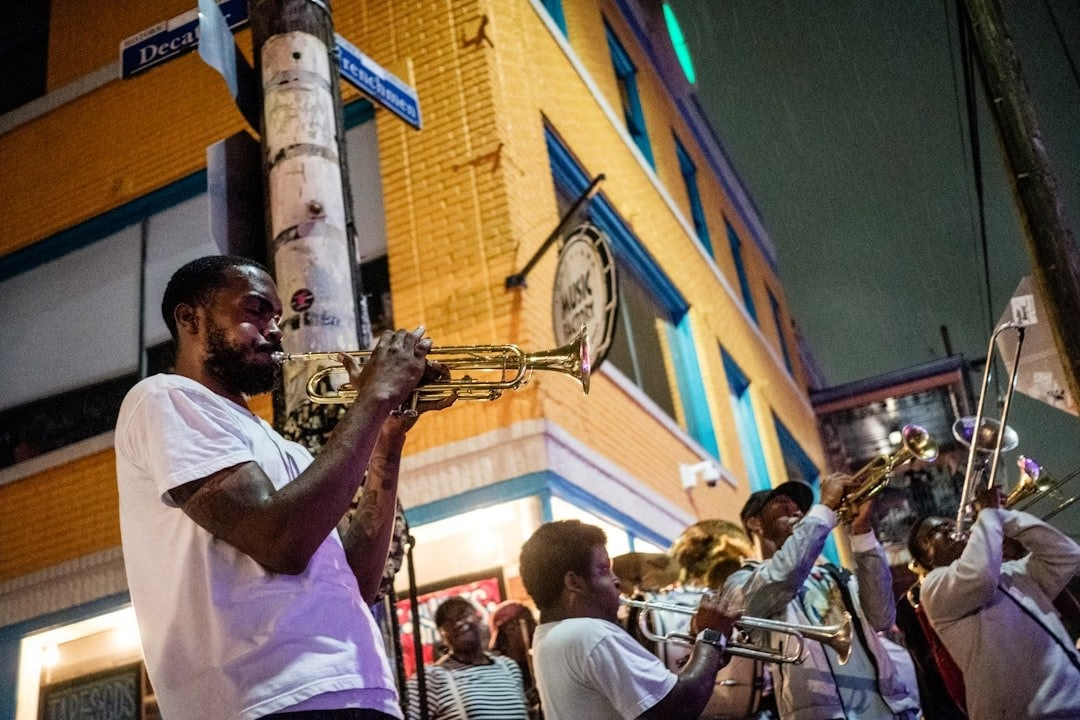
On a Friday evening in the French Quarter, the smell of frying beignets and spilled beer mingles with live brass coming through an open door on Frenchmen Street. Tourists move in slow, dense clusters down Bourbon Street while, two blocks over, locals eat red beans and rice at a neighborhood bar that hasn’t changed its menu in decades. The contrast tells you everything you need to know about New Orleans right now: it’s a city that absorbed a record number of visitors in 2025 and is still, somehow, itself — but you’ll have to work a little harder to find the parts worth finding.
Why New Orleans Is Relevant Right Now
According to NOLA.com, New Orleans welcomed its highest tourist numbers since 2019 in the most recently measured year, while also setting a new record for visitor spending. That’s a significant rebound for a city that was still navigating post-pandemic and post-storm recovery just a few years ago. The data signals two things simultaneously: the city is healthier economically than it’s been in years, and it’s also more crowded than it’s been in years. If you’ve been putting off a trip because you heard it was rough going, the infrastructure picture has improved. If you’ve been assuming you’d have the place to yourself, recalibrate.
The crowds are concentrated and predictable, though. They peak hard during Mardi Gras (February–March) and Jazz Fest (late April–early May), and they thin out noticeably in summer, when the heat and humidity become genuinely punishing — highs routinely touch 95°F with matching humidity. Fall, particularly October and November, is widely considered the sweet spot: temperatures drop into the low 80s, the festival calendar stays active, and the visitor pressure eases.
What to Know Before You Go
New Orleans is served by Louis Armstrong New Orleans International Airport (MSY), roughly 15 miles from the French Quarter. Rideshare from the airport to the Quarter runs about $25–$35. Within the city, the St. Charles streetcar line is the most useful for visitors, running from the French Quarter through the Garden District for $1.25 per ride — far more pleasant than sitting in traffic.
The city divides roughly into a handful of distinct areas that feel genuinely different from each other. The French Quarter is the tourist center and prices everything accordingly. The Garden District, about 2 miles upriver, has quieter streets, the famous above-ground cemeteries, and better restaurants at lower price points. Mid-City, further north, is where more of the city’s daily life happens — less posturing, better po’boys. The Bywater and Marigny neighborhoods, downriver from the Quarter, are where Frenchmen Street sits: a live music strip that’s been creeping toward tourist saturation but still delivers real music most nights of the week.
The US dollar is the currency; English is the language; tipping at 20% is expected in restaurants and bars. Budget travelers can manage on roughly $120–$150 per day including a mid-range hotel; the French Quarter will push that higher without trying. The sources cited do not flag specific safety concerns at the time of writing, but the city’s street-crime patterns are well documented — the Quarter and major tourist corridors are heavily patrolled, and standard urban caution applies everywhere else.
What to Do
The case for Frenchmen Street over Bourbon Street is overwhelming. On any given evening, three or four venues within a few hundred feet of each other host live brass bands, jazz combos, and funk groups simultaneously — and most of them charge no cover. The Spotted Cat Music Club and d.b.a. are the most consistently programmed, though the schedule shifts. Arrive before 9 p.m. if you want a spot that isn’t standing room only.
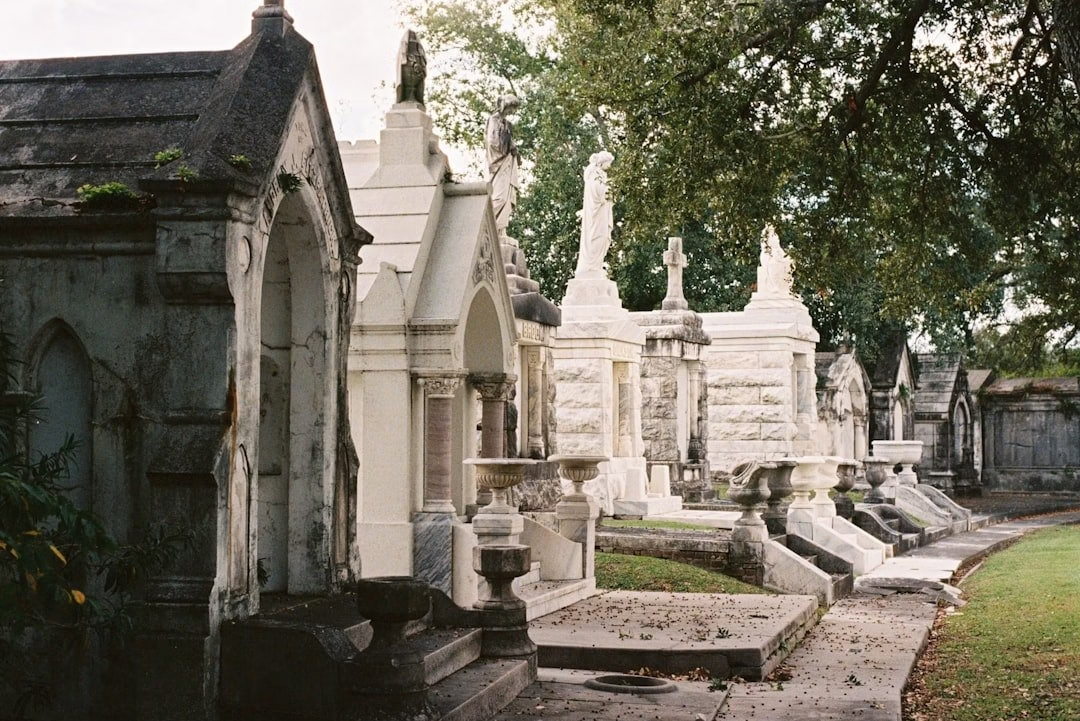
The Garden District is worth a full morning. The neighborhood’s antebellum houses are genuinely impressive in scale and detail, and the Lafayette Cemetery No. 1 — a 19th-century above-ground burial ground on Washington Avenue — is quieter and more navigable than the more famous St. Louis Cemetery No. 1 in the Quarter. Take the streetcar down St. Charles Avenue; the ride itself earns its time.
For food, Commander’s Palace in the Garden District remains the standard-bearer for Creole cooking at a formal level — lunch is significantly cheaper than dinner, with three-course options typically under $55. For something less ceremonial, Central Grocery on Decatur Street in the Quarter is credited with inventing the muffuletta sandwich. The bread is dense, the olive salad is aggressive, and the half-sandwich is enough for most people. Arrive before noon to avoid a line that stretches onto the sidewalk.
The New Orleans Jazz Museum at the Old U.S. Mint, on the edge of the French Quarter near the river, is a legitimate institution rather than a tourist trap. The collection covers the full arc of jazz’s development in the city, with enough instruments and recorded material to spend two hours without feeling rushed. Admission runs around $6 for Louisiana residents and $10 for out-of-state visitors.
If you’re in town between late April and early May, the New Orleans Jazz and Heritage Festival draws major headliners to the Fair Grounds Race Course in Mid-City. Single-day tickets have historically run $80–$110 in advance. The lineup mixes legacy acts with contemporary Louisiana artists, and the food vendors — crawfish étouffée, cochon de lait, festival bread — are as much the point as the music.
What to Skip
Skip the ghost tours. All of them. There are dozens operating in the French Quarter, most charging $25–$35 per person to walk the same three blocks and deliver the same rehearsed stories about haunted hotels and voodoo queens. The history of New Orleans is genuinely strange and dark, but it doesn’t require a guide in a cape to access it. Read a book before you go, walk the streets yourself, and spend that $30 on food instead.
Bourbon Street itself is fine for one loud hour if you’re curious about the spectacle, but it’s also the part of the city that exists almost entirely for visitors — overpriced drinks in plastic cups, cover bands playing songs from fifteen years ago, and souvenir shops selling things no one needs. Frenchmen Street is a 10-minute walk and a different city.
Practical Notes
US citizens need no visa to travel domestically; international visitors should verify current US entry requirements before booking. As of May 2026, standard visa rules apply for most nationalities, though recent US policy changes around visa vetting have introduced additional scrutiny for some travelers — check with the US Embassy in your home country for current processing times.
Best time to visit: October through November for manageable weather and thinner crowds. Spring festival season (late April–early May) is worth the crowds if Jazz Fest is the goal, but book accommodation 3–4 months out and expect rates to climb above $200 per night for anything decent near the Quarter. Summer is genuinely hot and genuinely cheaper — hotels drop, but the heat is not comfortable for extended outdoor time.
On the overtourism question: the record visitor numbers reported by NOLA.com are a net positive for a city that depends heavily on hospitality employment, but they also mean the French Quarter’s tolerance for foot traffic is being tested. Residents of neighborhoods adjacent to the Quarter have raised concerns about noise, short-term rental displacement, and the erosion of neighborhood character. Staying in locally owned guesthouses rather than large chain hotels, eating at neighborhood restaurants rather than tourist-strip operations, and spending time outside the Quarter all make a practical difference.