
Broadway After Midnight
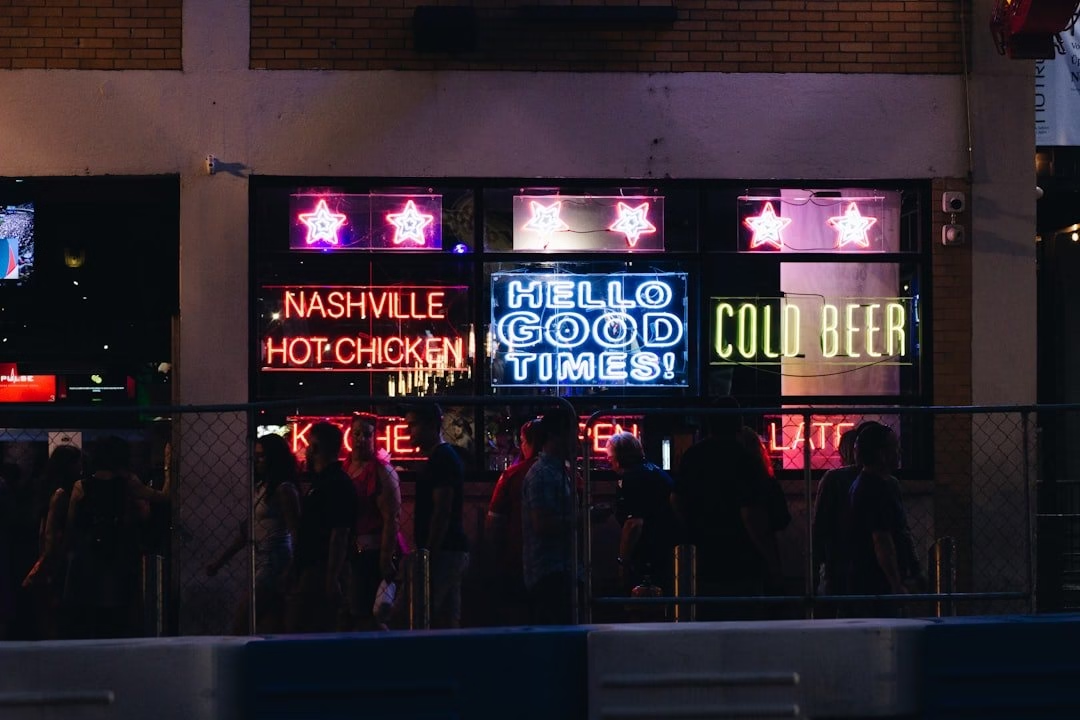
By 10 p.m. on a Thursday, Lower Broadway is a corridor of competing bass lines. Neon light bleeds out of a dozen honky-tonk doorways onto a street thick with bachelorette sashes and cowboy hats that were purchased three hours ago. A cover band is hammering through a Johnny Cash song on the third floor of a bar so loud you feel it in your sternum before you hear the lyrics. Somewhere beneath all of it, if you wedge yourself into the right corner of a quieter room, someone’s playing actual country music — the kind with a steel guitar and a story that doesn’t resolve happily. That’s Nashville in 2026: the real and the performed occupying the same square mile, and the trick is knowing which is which.
Why Nashville Is Worth Watching Right Now
Nashville has been one of the fastest-growing cities in the United States for over a decade, and its tourism infrastructure has expanded to match. According to Travel And Tour World, the city is actively repositioning itself — leaning into a broader identity that goes beyond the bachelorette-party economy that dominated its reputation through the late 2010s. The push now is toward what local boosters describe as Tennessee hospitality: food, live music, and neighborhood culture that exists independent of the Lower Broadway strip.
Whether the rebrand sticks is a fair question. The tourism machinery is substantial — Nashville’s airport, BNA, handled over 23 million passengers in 2024, and hotel development has not slowed — but the city has enough distinct neighborhoods and genuine cultural depth to reward travelers who look past the main drag. The key is managing expectations about where the crowds will be.
What to Know Before You Go
Nashville sits in the center of Tennessee, roughly 4 hours by car from Atlanta and about 3 hours from Memphis. Direct flights connect it to most major U.S. hubs, and BNA is consistently rated among the more manageable mid-size airports in the country. The city runs on Central Time.
Getting around without a car is possible but not seamless. The WeGo bus system covers the core, and rideshares work well within the urban center, but Nashville sprawls considerably. If you plan to venture into East Nashville or out to The Gulch, a car or consistent rideshare budget (expect $12–$18 per trip between neighborhoods) makes life easier.
Currency is USD. English is the working language everywhere. Climate-wise, spring (March through May) and fall (September through November) are the most comfortable windows, with daytime temperatures typically ranging from the mid-60s to low 80s Fahrenheit. Summer is hot and humid, regularly pushing past 90°F, and the outdoor bar scene suffers for it. Winter is mild but gray.
Two neighborhoods anchor most worthwhile visits: Downtown and Lower Broadway, which is the tourist core, and East Nashville, across the Cumberland River, which has a denser concentration of independent restaurants, bars, and local character. The Gulch, just south of downtown, has become a higher-end dining and nightlife district worth an evening.
What to Do
Catch a late set on Lower Broadway — but pick carefully. The strip between 1st and 5th Avenue is where Nashville’s live music economy is most concentrated. Dozens of bars run live bands from roughly noon until 3 a.m., and most have no cover charge — the performers work for tips. The caliber varies enormously. Walk in, listen for 10 minutes, and if the band is going through the motions, walk out and try the next one. The best sets tend to happen after 10 p.m. on weekdays when the room thins out. Budget around $20–$30 in tips if you stay for a full set from a band that earns it.
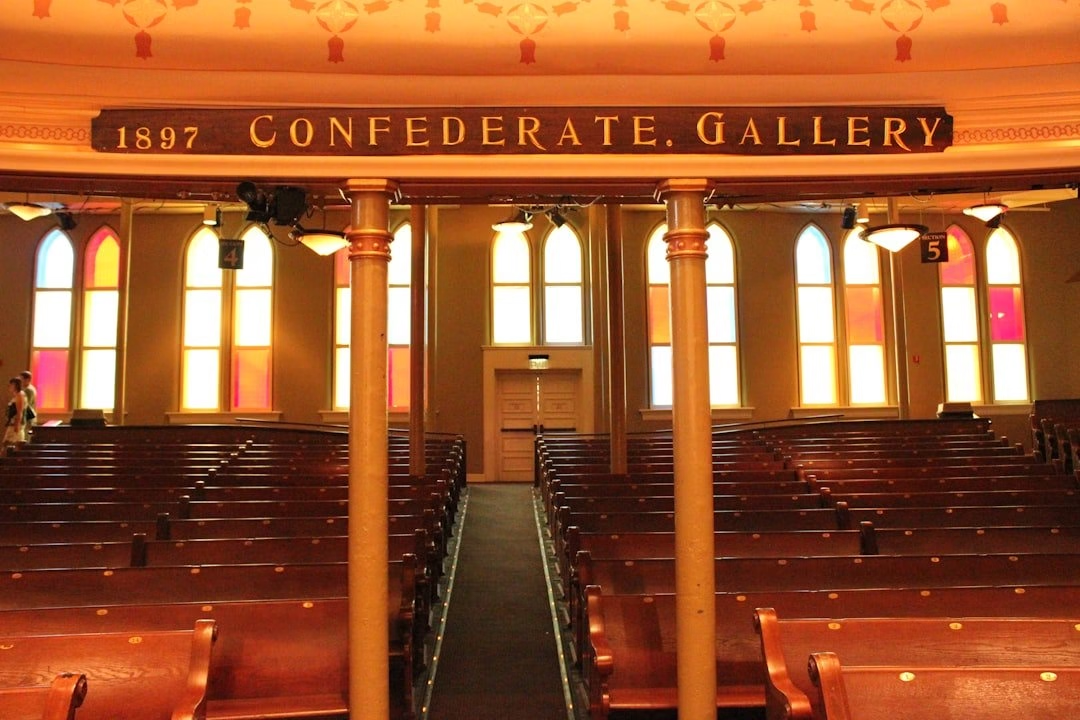
Spend a morning at the Ryman Auditorium. The Ryman predates the honky-tonk era — built in 1892 as a tabernacle, it served as the Grand Ole Opry’s home from 1943 to 1974. Self-guided daytime tours run $30 per adult, and the room itself justifies the price: the original church pews, the curved balcony, the acoustics. If a show is playing during your visit, a seat in the Ryman is worth the ticket price for the room alone, regardless of the artist. The building is on 5th Avenue North, about a 5-minute walk from the Broadway strip.
Eat in East Nashville, not on Broadway. The restaurants lining Lower Broadway serve the kind of food that’s designed to absorb alcohol rather than deliver any particular experience. Cross the river. East Nashville has a real neighborhood restaurant scene — breakfast spots, Vietnamese and Mexican counters, Southern food that hasn’t been engineered for Instagram. The neighborhood runs along Gallatin Pike and Eastland Avenue and is a 10-minute Uber ride from downtown. Budget $15–$30 per person for a serious meal.
Visit the Country Music Hall of Fame on a weekday morning. This is one of the few major tourist attractions in Nashville that delivers what it promises. The permanent collection traces country music’s roots through artifacts, recordings, and oral history in a way that’s genuinely substantive — not just a wall of gold records. Admission runs $28.95 for adults. Avoid weekend afternoons; the main galleries become difficult to move through. The Hall of Fame connects by an enclosed skybridge to Historic RCA Studio B, where Elvis and Dolly Parton recorded; that’s an add-on tour worth taking if you have 90 minutes.
Walk The Gulch in the evening. This neighborhood, about a 15-minute walk south of Broadway, has become Nashville’s most concentrated fine-dining corridor. It’s polished in a way that can feel anonymous — lots of exposed brick and Edison bulbs — but the food at several restaurants is legitimately good. It’s also substantially quieter than downtown after 9 p.m., which is reason enough to go.
What to Skip
Pedal taverns and party buses. These are everywhere on Lower Broadway and the surrounding streets — multi-passenger bike-bar contraptions that block traffic and produce a particular kind of loud. They are the defining image of Nashville’s bachelorette economy, and they are not compatible with enjoying any other aspect of the city. More practically: if you’re not on one, they make walking and driving in the core significantly worse. Plan your downtown time for early evening (before 8 p.m.) or late night (after midnight) to avoid the peak window when they’re most concentrated.
The Broadway strip itself, during peak Saturday hours, is also more exhausting than entertaining for most travelers who didn’t come specifically for the party scene. There’s a version of Lower Broadway that’s worth experiencing — it’s just not the version that exists between 7 p.m. and midnight on a Saturday in May.
Practical Notes
Nashville requires no visa for U.S. citizens, obviously, and no entry considerations beyond a standard domestic flight or drive. For international visitors: as of early 2026, standard U.S. visa and entry requirements apply. Verify current requirements before traveling, as U.S. entry policies have shifted considerably in recent months.
Cost level: Mid-range to high. A solid trip — two nights at a decent hotel in or near downtown, meals, the Ryman tour and Country Music Hall of Fame, and a reasonable bar tab — will run $400–$600 per person excluding flights. Hotel rates spike sharply during events at Nissan Stadium and during CMA Fest in June, when downtown becomes genuinely difficult to navigate.
Best time to go: April and October are the sweet spots. Crowds are manageable, weather is good, and the city’s outdoor spaces (Centennial Park, Shelby Bottoms Greenway in East Nashville) are actually usable.
Overtourism note: Downtown Nashville is genuinely overcrowded on weekends, and local residents — particularly in East Nashville — have expressed frustration as their neighborhood has become a secondary tourist destination. Spend money at independent businesses rather than chains, tip generously at live music venues, and treat East Nashville like a neighborhood, not an extension of the Broadway entertainment district.
The sources cited do not flag specific safety concerns at the time of writing, though the Broadway strip on weekend nights involves the usual considerations for a dense, alcohol-heavy entertainment district.