
A City That Has Always Moved Between Worlds
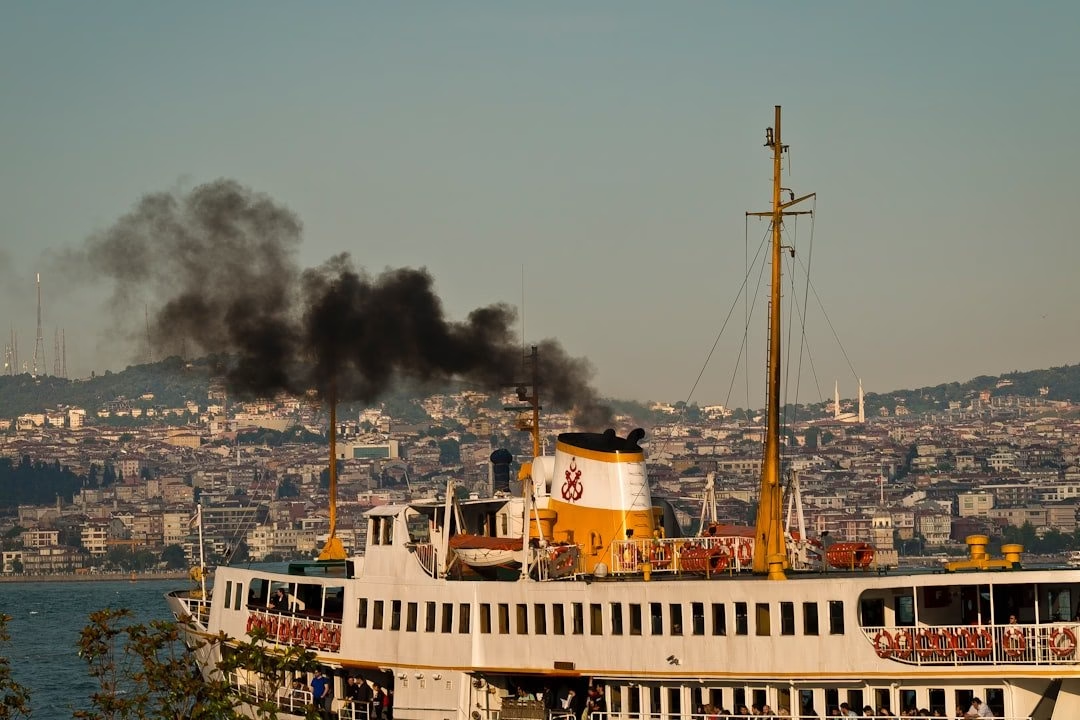
The smell hits you first on the Galata Bridge at seven in the morning: salt off the Bosphorus, diesel from the commuter ferries, and coal smoke drifting down from the tea houses stacked up the hill toward Karaköy. Fishermen line the railing shoulder to shoulder, lines dropping into the strait below, while the city lurches to life around them — trams grinding up from Eminönü, vendors stacking simit rings onto long poles, a call to prayer rolling out from the Blue Mosque on the opposite shore and meeting another, slightly out of sync, from somewhere across the water in Asia.
Why Istanbul Is Worth Paying Attention to Right Now
In May 2026, Reuters reported that Turkey and Saudi Arabia are moving toward scrapping some visa requirements between the two countries. On its own, that’s a bilateral diplomatic note. In context, it’s a signal about Istanbul’s deepening role as a transit and destination hub connecting Europe, the Gulf, and Central Asia — a position the city has held geographically for centuries and is now consolidating commercially.
The practical effect for travelers from elsewhere: increased flight connectivity and tourism infrastructure tend to follow when major regional economies loosen travel barriers. Istanbul’s two main airports — Atatürk, now largely decommissioned for commercial flights, and the vast Istanbul Airport (IST) on the European side, which opened in phases from 2018 — already make the city one of the most connected transit points in the world. Turkish Airlines flies to more countries than almost any other carrier. More Gulf traffic means more route options, more competition, and in theory, better prices for inbound travelers from many origins.
This is also a city that has been navigating significant internal pressures: inflation that ran extremely high through 2023 and 2024 reshaped the cost landscape considerably, making Istanbul dramatically cheaper for visitors holding dollars or euros even as it created real hardship for residents. That gap has narrowed somewhat as the lira has partially stabilized, but Istanbul remains substantially less expensive than comparable European capitals for accommodation and food. That calculus deserves honest acknowledgment — visiting during a currency crisis benefits travelers at local expense, and spending at locally-owned businesses rather than international chains is a straightforward way to direct money more usefully.
What to Know Before You Go
Istanbul straddles two continents. The European side holds the historic peninsula (Sultanahmet, where the major Ottoman monuments cluster), the nightlife and gallery district of Beyoğlu stretching up from Karaköy through Taksim, and the residential neighborhoods extending toward the airport. The Asian side — Kadıköy, Üsküdar, Moda — is where many Istanbullus actually live, noticeably less touristed and worth crossing to for a half-day or full day.
Getting there: Istanbul Airport (IST) is approximately 35–40 kilometers from the city center. The Havaist airport bus network connects to multiple city points; the journey to Taksim Square takes roughly 45 to 60 minutes depending on traffic and costs a fraction of a taxi. The metro line extending to the airport has expanded service. A taxi from the airport to Sultanahmet will run considerably more — verify current metered rates, as they shift with fuel costs.
Language: Turkish. English is widely spoken in tourist-facing businesses in Beyoğlu and Sultanahmet, much less so in residential Asian-side neighborhoods. A few words of Turkish — teşekkürler (thank you), lütfen (please) — go a long way in terms of basic courtesy.
Currency: Turkish lira (TRY). Credit cards are accepted broadly in hotels and restaurants catering to tourists; smaller neighborhood establishments often prefer cash. ATMs are plentiful in central areas. As of mid-2026, verify current exchange rates before traveling — the lira has been volatile.
Visa status: As of the May 2026 Reuters report, the Turkey-Saudi Arabia visa liberalization was still described as forthcoming rather than implemented. Citizens of many European countries, the UK, and the US have been eligible for e-visa entry to Turkey; verify current requirements at the official Turkish e-visa portal before booking. Entry rules change. The sources cited here reflect reporting from May 2026 only.
What to Do: A Curated Four
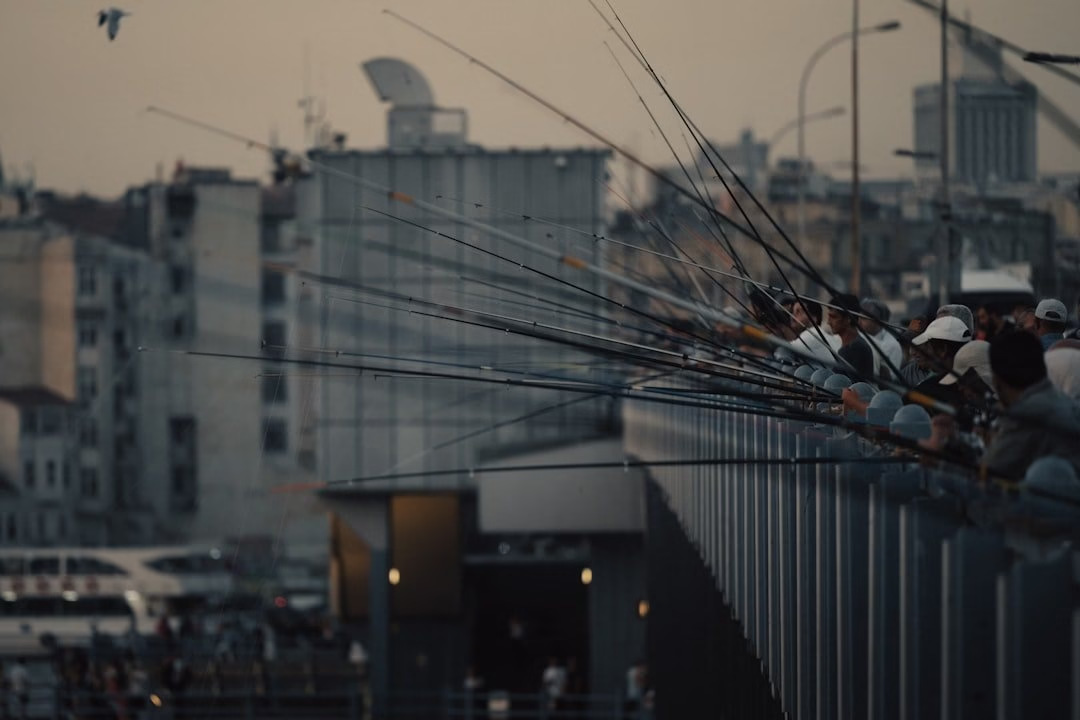
Spend a morning in Karaköy before the crowds arrive. The neighborhood at the northern foot of the Galata Bridge has shifted significantly over the past decade — what was once a working port district of hardware stores and ship chandlers now mixes those with coffee roasters, pastry counters, and independent design shops. The transition is real and the coffee is genuinely good. Walk uphill toward the Galata Tower and the streets narrow into something that actually requires slowing down. The tower itself involves a queue and an entry fee; the view from the surrounding streets costs nothing.
Cross to Kadıköy for a half-day. The ferry from Eminönü or Karaköy to Kadıköy on the Asian side takes about 20 minutes and costs a single transit fare loaded onto an Istanbul Kart (the city’s transit card, purchasable at ferry terminals and metro stations). Kadıköy’s covered market — the Kadıköy Bazaar — sells produce, cheese, fish, and spices to people who actually live nearby, not primarily to tourists. The streets radiating out from the market toward Moda have a neighborhood density that the tourist-oriented European-side districts largely lack.
The Süleymaniye Mosque over the Blue Mosque. Both are free to enter outside prayer times. The Blue Mosque (Sultan Ahmed Camii) draws the larger crowds by a significant margin — it’s the first stop on every group tour itinerary departing from Sultanahmet. Süleymaniye, uphill on the third of Istanbul’s historical hills, is architecturally comparable (both are Ottoman imperial mosques; Süleymaniye was completed in 1558 under Sinan), draws fewer visitors, and has a terrace overlooking the Golden Horn that functions as one of the better free viewpoints in the city. Dress appropriately for entry at either: shoulders and knees covered, shoes removed.
Take the Bosphorus ferry, not a tour boat. The public commuter ferry that runs the length of the Bosphorus from Eminönü up toward Anadolu Kavağı near the Black Sea entrance is a scheduled transit service, not a tourist product. It stops at actual neighborhoods — Beşiktaş, Arnavutköy, Bebek on the European side; Üsküdar, Kanlıca, Anadolu Hisarı on the Asian side. The round trip takes most of a day and costs a standard ferry fare rather than a tour-boat premium. Bring food from a market, find a seat on the upper deck, and watch the two continents slide past on either side.
What to Skip
The Grand Bazaar on a weekend afternoon. The bazaar itself — one of the largest covered markets in the world, with roughly 4,000 shops across 61 streets — is a genuinely significant piece of urban architecture that has been continuously operating since the 15th century. It is also almost unnavigable on Saturday afternoons in summer, when tour group traffic makes the main corridors feel like a one-way funnel. If you want to see it, go on a weekday morning. If you want to buy anything at a reasonable price, the Egyptian Spice Bazaar near Eminönü is smaller and similarly functional without the same tourist pricing pressure on every transaction. The Grand Bazaar’s most-photographed central halls sell predominantly items pitched at tourists; the working jewelers and fabric merchants in the outer sections are a different experience.
Practical Notes
Best time to go: April through early June and September through October. Istanbul in July and August is crowded and hot — temperatures regularly exceed 30°C (86°F) with humidity. November through March is quieter, cheaper, and genuinely cold; the city functions year-round and looks different under grey skies, but pack accordingly.
Cost level: Mid-range by European standards, budget by Western European capital standards. Accommodation in a decent hotel in Beyoğlu or Karaköy runs significantly cheaper than comparable properties in Paris or Amsterdam. Street food — a simit, a fish sandwich from the boats at Eminönü, a glass of tea — costs very little. Sit-down restaurants in tourist zones charge tourist prices; the same meal two streets off the main drag typically costs less.
Safety and ethics: The sources cited do not flag specific safety concerns for Istanbul at the time of writing. Turkey has experienced political tension and periodic civil unrest in prior years; check your government’s current travel advisory before departure. Respect local norms around religious sites — this applies to dress, noise, and photography inside mosques. Tipping is customary in restaurants, typically 10 percent.
Visa: As of May 2026, most Western passport holders require a Turkish e-visa, obtainable online before travel. Verify current requirements at the official source before booking; do not rely on this post for entry requirements, which change without notice.