
A Major Victory for Reproductive Rights
In a significant development for women’s healthcare, the United States Supreme Court has temporarily restored access to mifepristone, the abortion pill, through telehealth, mail delivery, and pharmacies. This decision, announced on May 4, 2026, reverses previous restrictions and ensures that women across America can continue to access this FDA-approved medication.

The Decision: Restoring Access
The Supreme Court’s ruling temporarily restores several key access points for mifepristone:
- Telehealth consultations: Women can consult with healthcare providers remotely
- Mail delivery: The medication can be shipped directly to patients
- Pharmacy dispensing: Licensed pharmacies can provide the medication
- Continued availability: The drug remains accessible while legal challenges continue
According to ABC7 Los Angeles and The New York Times, this decision maintains the status quo while broader legal challenges to the FDA’s approval of mifepristone work their way through the courts.
Understanding Mifepristone
Mifepristone is a medication that has been used safely in the United States for over two decades:
Medical Facts
- FDA-approved since 2000: Over 20 years of safe use in the United States
- Used in medication abortions: Part of a two-drug regimen
- Highly effective: Success rate of approximately 95-98%
- Safe profile: Lower complication rate than many common medical procedures
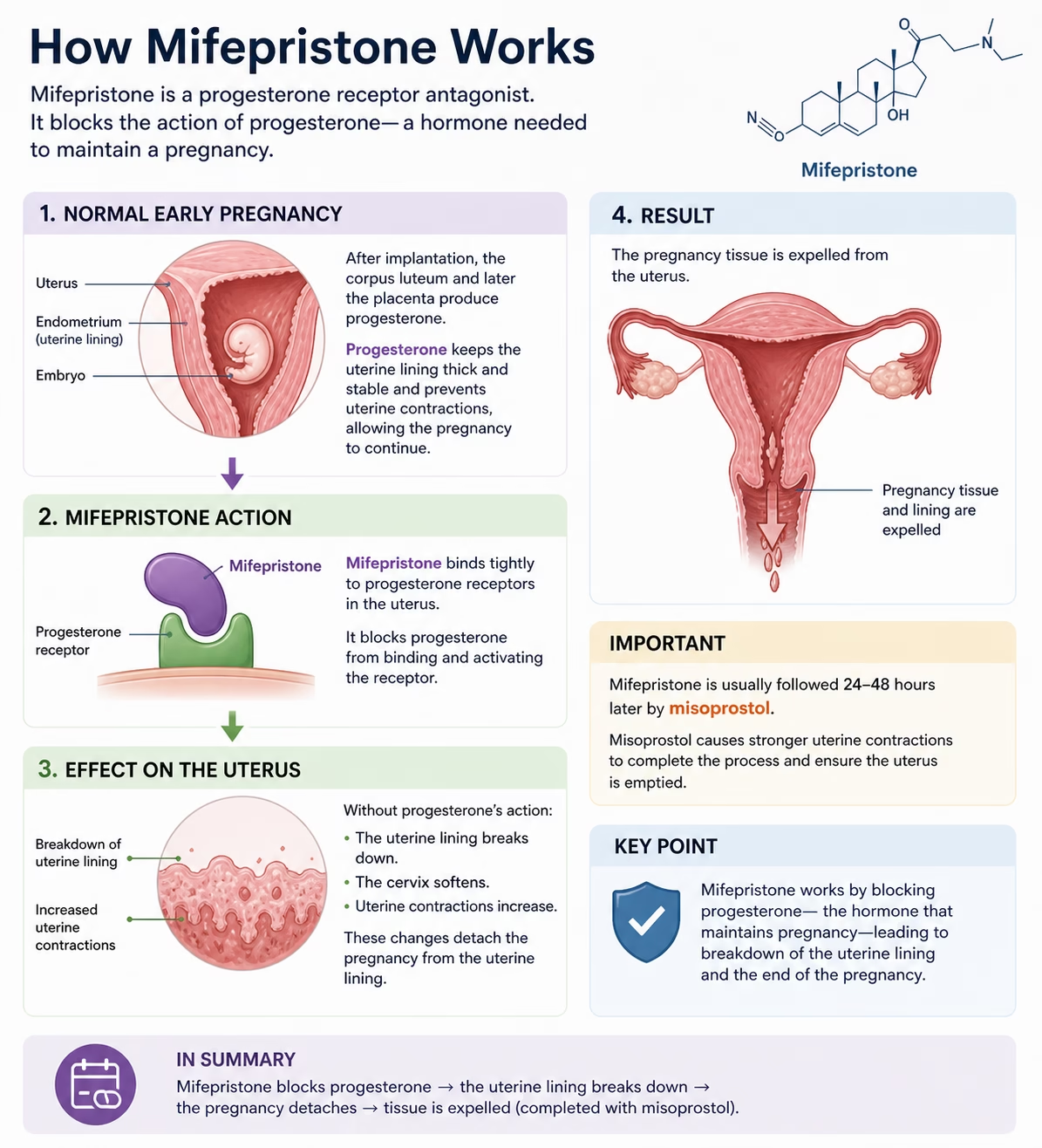
How It Works
Mifepristone works by blocking progesterone, a hormone necessary for pregnancy to continue. When followed by misoprostol, it safely terminates early pregnancy.
The Legal Battle: A Timeline
The fight over mifepristone access has been ongoing:
- 2000: FDA approves mifepristone for use in the United States
- 2016: FDA updates labeling to reflect evidence-based practices
- 2021: FDA allows mail delivery during COVID-19 pandemic
- 2023: Texas court challenges FDA approval
- 2024: Supreme Court maintains access while case continues
- 2026: Current ruling restores telehealth and pharmacy access
What This Means for Women’s Healthcare
The Supreme Court’s decision has immediate and practical implications:
For Urban Women
- Continued access through established healthcare providers
- Pharmacy dispensing options remain available
- Telehealth provides convenient consultation options
For Rural Women
- Mail delivery eliminates travel barriers
- Telehealth connects patients with distant providers
- Reduced need for multiple in-person visits
For Low-Income Women
- Reduced costs associated with travel and time off work
- More provider options through telehealth
- Competitive pricing through pharmacy access
“Access to safe and effective medication abortion shouldn’t depend on your zip code or income level. This decision helps ensure that all women can access the healthcare they need.”
— Women’s Health Advocate
The Broader Context: Reproductive Rights in America
This decision comes amid ongoing debates about reproductive rights:
State-Level Variations
- Protective states: Some states have enacted laws protecting abortion access
- Restrictive states: Others have limited or banned abortion procedures
- Medication abortion: Has become increasingly important as clinic access decreases
Healthcare Implications
- Patient autonomy: Women can make private healthcare decisions
- Medical privacy: Telehealth and mail delivery protect confidentiality
- Provider flexibility: Healthcare professionals can offer comprehensive care

Medical Community Response
Healthcare professionals have largely supported maintaining access to mifepristone:
- American Medical Association: Supports evidence-based access to reproductive healthcare
- American College of Obstetricians and Gynecologists: Emphasizes safety and efficacy data
- Pharmacists: Professional organizations support dispensing authority
- Telehealth providers: Platforms have expanded reproductive health services
What Happens Next
The legal landscape continues to evolve:
- Ongoing litigation: Challenges to FDA approval continue in lower courts
- State legislation: States may enact additional restrictions or protections
- Healthcare adaptation: Providers adjust to changing regulatory environment
- Patient education: Women need accurate information about their options
Understanding Your Rights
For women seeking information about medication abortion:
- Consult healthcare providers: Speak with licensed medical professionals
- Know state laws: Understand regulations in your jurisdiction
- Access reliable information: Use trusted medical sources
- Consider all options: Make informed decisions about your healthcare
The Global Context
America’s debate over medication abortion reflects global trends:
- Expanding access: Many countries have liberalized abortion laws
- Telemedicine growth: Technology enables remote healthcare delivery
- Medical advancement: Improved protocols enhance safety and efficacy
- Human rights framework: International bodies recognize reproductive rights
Conclusion: Healthcare Access Affirmed
The Supreme Court’s decision to restore access to mifepristone through telehealth, mail, and pharmacies represents a significant moment in the ongoing debate over reproductive rights in America. While legal challenges continue, this ruling ensures that women can currently access this safe and effective medication.
The decision highlights the intersection of medicine, law, and personal autonomy. As the legal landscape continues to evolve, the fundamental question remains: how do we ensure that all women have access to safe, effective healthcare regardless of where they live?
For now, the Court’s ruling provides clarity and continuity for patients, providers, and pharmacists navigating this complex terrain.
Sources and Credits
- ABC7 Los Angeles: Supreme Court restores access to abortion pill mifepristone through telehealth, mail and pharmacies, May 4, 2026
- The New York Times: Supreme Court Temporarily Restores Access to Abortion Pill by Mail, May 2026
- FDA: Mifepristone Information and Safety Data
- American College of Obstetricians and Gynecologists: Clinical Guidance on Medication Abortion
- Images: Unsplash, used under free license
Last updated: May 5, 2026. This article provides information about the Supreme Court decision and its implications for women’s healthcare access.