
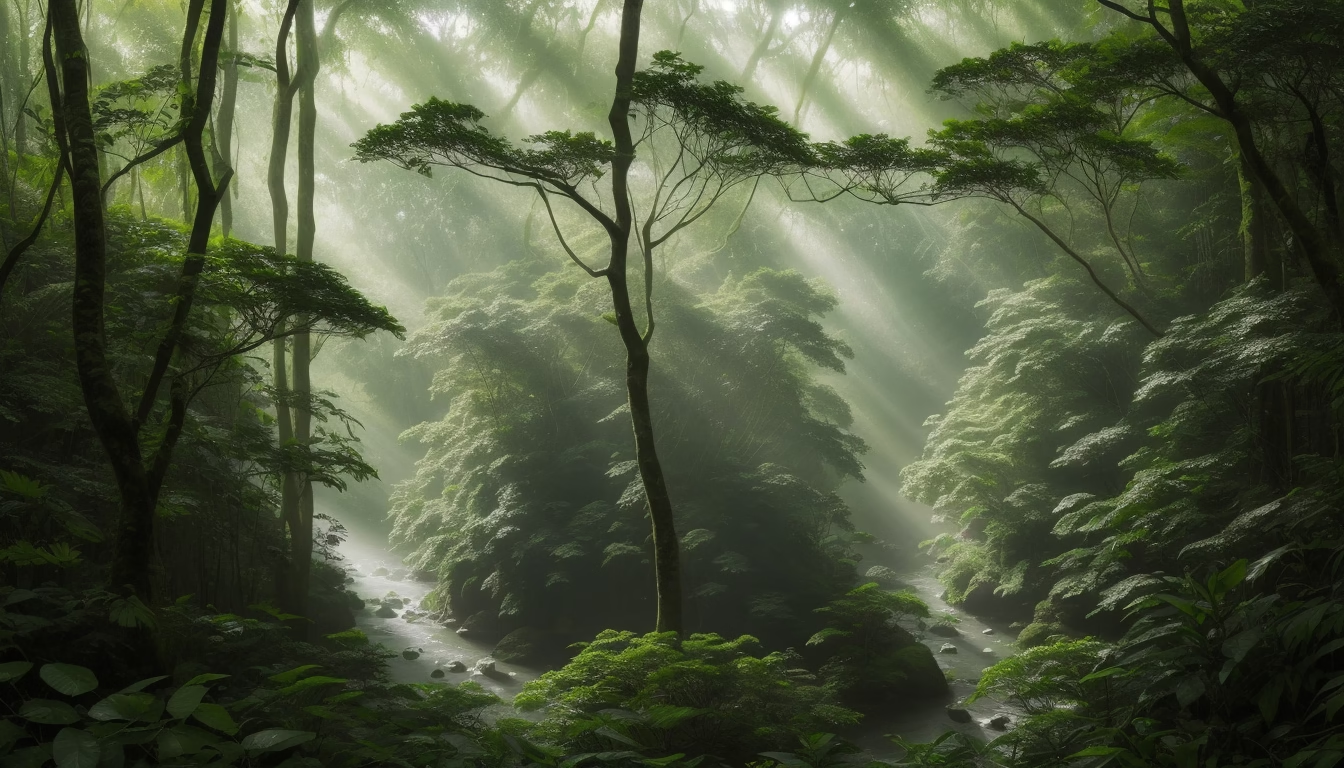
Brazil holds roughly one-tenth of every species alive on Earth today, spread across ecosystems as different as the Amazon rainforest, the wetland expanse of the Pantanal, and the dry scrubland of the Caatinga (Mongabay, 2023). No other country comes close to matching that combination of scale and habitat diversity, which is why virtually every serious biodiversity ranking puts Brazil in first place.
Biodiversity rankings are trickier to build than most “top 10” lists because species counts depend heavily on how thoroughly a country has been surveyed — wealthy nations with more scientific infrastructure tend to have more complete species inventories, while some of the most biologically rich regions on Earth, particularly parts of Africa and Southeast Asia, remain comparatively under-documented. Keep that caveat in mind as you read the ranking below.
Key Takeaways
– Brazil is the world’s most biodiverse country, home to roughly 10% of all known species, according to Mongabay’s compiled ranking (2023).
– Indonesia ranks second, with more mammal species than any other country on Earth despite covering a fraction of Brazil’s land area.
– Colombia holds the world’s highest bird diversity, with 1,917 recorded species — more than any other nation.
– Seventeen countries are formally classified as “megadiverse” and together account for roughly 70% of the planet’s biodiversity.
Which Country Has the Most Biodiversity on Earth?
Brazil ranks as the world’s single most biodiverse country, home to an estimated one-tenth of all species on the planet across ecosystems including roughly 60% of the Amazon rainforest, the Pantanal wetlands, and the Atlantic Forest along its coast (Mongabay, 2023). It leads global rankings for plant and amphibian species diversity in particular.
| Rank | Country | Notable Strength |
|---|---|---|
| 1 | Brazil | Leads in plant and amphibian species; ~10% of all known species |
| 2 | Indonesia | Most mammal species of any country; 10,000+ islands |
| 3 | China | Strong across birds, plants, and freshwater fish |
| 4 | Colombia | Highest bird diversity in the world (1,917 species) |
| 5 | Peru | Second-highest bird diversity; top five for amphibians and mammals |
| 6 | Mexico | Strong across birds, mammals, reptiles, and plants |
| 7 | Australia | Leads globally in reptile and fish species diversity |
| 8 | India | High reptile and bird diversity across varied ecosystems |
| 9 | Ecuador | Outpaces the US in birds and amphibians despite far smaller area |
| 10 | United States | High biodiversity from an unusually broad range of ecosystems |
(Source: Mongabay, “The top 10 most biodiverse countries”, updated 2023, using a weighted index of amphibian, bird, fish, mammal, reptile, and vascular plant species.)
Brazil’s ecological range is what separates it from every other country on this list — few nations combine a rainforest the size of a continent, an inland wetland larger than several European countries, and a savanna region, the Cerrado, that is itself considered one of the most species-rich savannas on Earth.
Why Does Indonesia Rank So High Despite Its Smaller Size?
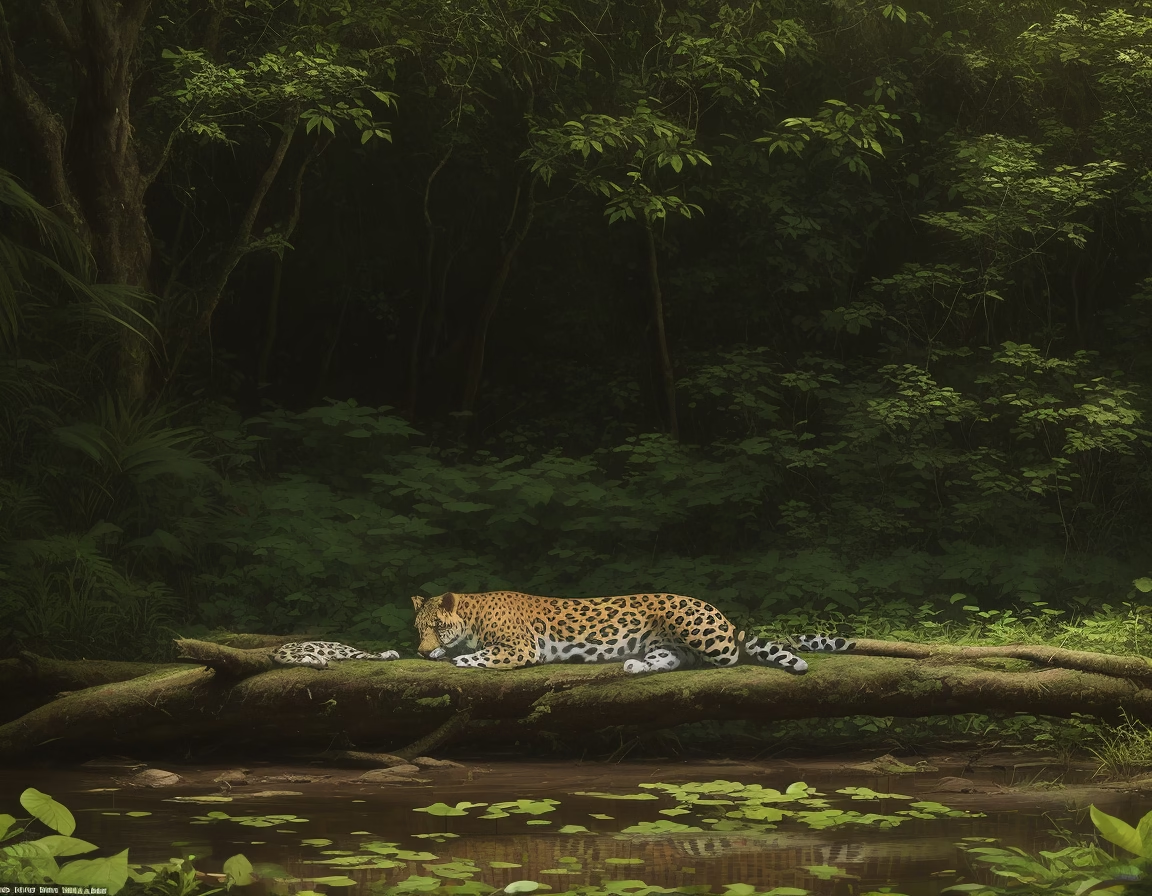
Indonesia ranks second globally in overall biodiversity and holds more mammal species than any other country on Earth, a result of its unique geography as an archipelago of more than 17,000 islands spanning two major biogeographic realms (Mongabay, 2023). That island fragmentation has driven extraordinary rates of species isolation and evolution.
Indonesia straddles the Wallace Line, an invisible biogeographic boundary named after naturalist Alfred Russel Wallace, separating fundamentally Asian fauna to the west from fundamentally Australian fauna to the east. Islands on either side of that line evolved almost entirely separately for millions of years, which is a major reason Indonesia alone hosts species as different as Sumatran tigers, orangutans, and Komodo dragons — animals that would never naturally overlap in range on a single connected landmass.
What Makes Colombia the World Leader in Bird Diversity?
Colombia holds the highest bird diversity of any country on Earth, with 1,917 recorded species — more than the United States and Canada combined, despite Colombia covering a fraction of their combined land area (Mongabay, 2023). That extraordinary density comes from Colombia’s position straddling the Andes, the Amazon, and two ocean coastlines within a single country.
Colombia’s varied terrain — three separate Andean mountain ranges, Caribbean and Pacific coastlines, and a substantial share of the Amazon basin — creates dramatically different climate zones within short distances, each supporting different bird communities. Ecotourism built specifically around birdwatching has grown rapidly in Colombia in recent years, partly as regions once affected by decades of internal conflict have opened to travelers, turning some of the country’s richest birding areas into some of its newest tourism destinations.
How Do Peru and Mexico Compare?
Peru ranks second globally for bird diversity and places among the top five countries for both amphibian and mammal species, while Mexico ranks consistently strong across birds, mammals, reptiles, and plants — both countries owe their diversity to dramatic elevation changes packed into relatively compact territory (Mongabay, 2023). Peru’s landscape runs from Pacific coastal desert to Andean peaks to Amazon lowlands within a single country.
Mexico’s biodiversity draws from its position where North American and Central American ecosystems meet, giving it species assemblages found nowhere else — it’s one of only 17 countries formally classified as “megadiverse,” a designation requiring at least 5,000 endemic plant species alongside a qualifying marine ecosystem. Peru holds the same megadiverse status, driven substantially by its share of the Amazon basin and the extraordinary vertical range of the Andes running through its territory.
Why Do Australia, India, and Ecuador Make the Top 10?
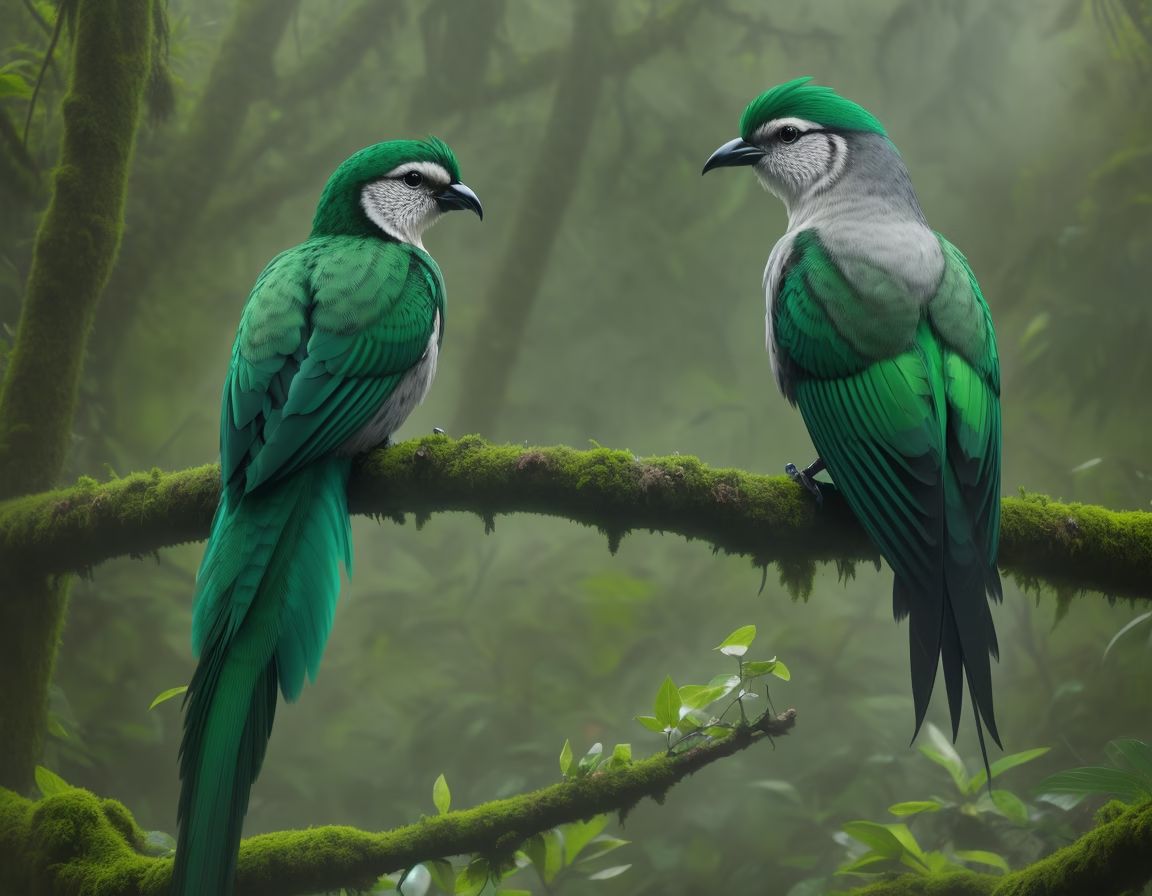
Australia leads the world in reptile and fish species diversity due to millions of years of isolation as its own continent, India combines high reptile and bird diversity across desert, forest, and Himalayan ecosystems, and Ecuador packs bird and amphibian diversity that outpaces the far larger United States into a country roughly the size of Nevada (Mongabay, 2023). All three demonstrate that biodiversity doesn’t scale simply with land area.
Australia’s evolutionary isolation, cut off from other major landmasses for tens of millions of years, produced an unusually high rate of endemism — species found nowhere else — particularly among reptiles and marsupials. Ecuador’s disproportionate diversity comes largely from the Galápagos Islands combined with its mainland Andean and Amazonian territory, giving it access to entirely distinct ecosystems within a country covering roughly 283,000 square km, smaller than many single US states.
What Are “Megadiverse” Countries?
Seventeen countries are formally classified as megadiverse, a designation requiring at least 5,000 endemic plant species plus a qualifying marine ecosystem, and together these 17 nations hold approximately 70% of all biodiversity on Earth despite covering less than 10% of the planet’s land surface (World Economic Forum, 2024). Most countries in this list also appear in the top 10 biodiversity ranking above.
The megadiverse classification, originally proposed by conservation researchers in the late 1990s, was designed specifically to focus international conservation funding and attention on the relatively small number of countries responsible for protecting the overwhelming majority of the planet’s species. Brazil, Indonesia, Colombia, Mexico, Peru, and Ecuador all hold megadiverse status, alongside countries like the Democratic Republic of Congo, Madagascar, and Papua New Guinea that don’t crack the overall top 10 but still hold outsized ecological importance.
Why Are Biodiversity Rankings So Hard to Measure Precisely?
Building an accurate global biodiversity ranking is genuinely difficult because species documentation isn’t remotely uniform across the planet. Wealthy countries with well-funded universities and research institutions, particularly in Europe and North America, have had their flora and fauna cataloged in exhaustive detail for well over a century. Many of the most species-rich regions on Earth, especially in Central Africa and parts of Southeast Asia, remain comparatively under-surveyed, meaning their true species counts are likely undercounted relative to better-studied nations.
This documentation gap means any biodiversity ranking is really measuring “confirmed and recorded species” rather than true total biodiversity, and researchers openly acknowledge that better funding and access could shift the rankings substantially, particularly for countries in the Congo Basin. Insects and other invertebrates compound the problem further — they make up the overwhelming majority of all animal species on Earth but are excluded from most standard biodiversity indices simply because cataloging them completely is such an enormous undertaking, even in well-studied regions.
How Does Habitat Loss Threaten These Biodiversity Hotspots?
Nearly every country on this list faces significant habitat loss pressure, and the specific threats vary by ecosystem. Brazil’s Amazon rainforest has lost significant forest cover to cattle ranching and agricultural expansion over recent decades, with deforestation rates fluctuating year to year based on enforcement policy and international pressure. Indonesia faces similar pressure from palm oil plantation expansion, which has fragmented habitat critical to species like orangutans and Sumatran tigers across Borneo and Sumatra.
Conservation responses have scaled up considerably in recent years, though unevenly. Costa Rica, despite not cracking this particular top 10, is frequently cited as a conservation success story after reversing decades of deforestation through payment-for-ecosystem-services programs that pay landowners directly to preserve forest cover. Several megadiverse countries, including Peru and Ecuador, have expanded protected area networks and indigenous-led conservation programs, recognizing that biodiversity protection and the rights of indigenous communities living within these ecosystems are frequently intertwined rather than separate issues.
Australia faces a distinct set of pressures tied to its high rate of endemism — because so many Australian species evolved in isolation and exist nowhere else, localized habitat loss or invasive species introductions can drive extinctions there more easily than in regions where a threatened species’ range extends across several countries. Invasive predators like feral cats have been directly linked to the decline of numerous native Australian mammal species over the past century, a conservation challenge largely absent from tropical megadiverse countries whose threats center more on deforestation and land conversion than introduced predators.
Frequently Asked Questions
Which country is the most biodiverse in the world?
Brazil is the most biodiverse country on Earth, home to an estimated 10% of all known species across ecosystems including the Amazon, the Pantanal, and the Atlantic Forest, according to Mongabay’s compiled ranking (2023). It leads global rankings specifically for plant and amphibian species diversity.
Which country has the most bird species?
Colombia has the highest bird diversity of any country in the world, with 1,917 recorded species, more than the United States and Canada combined despite covering far less land area (Mongabay, 2023). Its position spanning the Andes, Amazon, and two coastlines drives this exceptional range.
What does “megadiverse country” mean?
A megadiverse country is one of 17 nations formally classified as holding at least 5,000 endemic plant species alongside a qualifying marine ecosystem, together accounting for roughly 70% of the world’s biodiversity despite covering under 10% of Earth’s land area (World Economic Forum, 2024). Brazil, Indonesia, and Colombia are among the 17.
Why does Indonesia have more mammal species than any other country?
Indonesia’s more than 17,000 islands straddle the Wallace Line, a biogeographic boundary separating Asian and Australian fauna, allowing species on either side to evolve in isolation for millions of years and giving Indonesia the highest mammal species count of any country on Earth (Mongabay, 2023).
Is biodiversity ranking based on total species count or land area?
Biodiversity rankings like Mongabay’s use a weighted index across amphibians, birds, fish, mammals, reptiles, and vascular plants rather than raw land area, which is why smaller countries like Ecuador and Colombia rank above much larger nations such as the United States (Mongabay, 2023).
Sources (retrieved 2026-08-28):
– Mongabay, “The top 10 most biodiverse countries,” https://news.mongabay.com/2016/05/top-10-biodiverse-countries/
– World Economic Forum, “World Environment Day 2024: 17 megadiverse countries,” https://www.weforum.org/stories/2024/06/environment-day-biodiversity-world-megadiverse-countries/
– Wikipedia, “Megadiverse countries” (cross-reference), https://en.wikipedia.org/wiki/Megadiverse_countries