
The Verdict That Reshaped Bengal’s Political Landscape
May 4, 2026, will be remembered as a watershed moment in West Bengal’s political history. On this day, the Bharatiya Janata Party (BJP) achieved what once seemed impossible — breaking through the state’s entrenched political barriers to emerge as the dominant force in the 2026 West Bengal Legislative Assembly elections.
With a historic voter turnout of 92.93%, the highest ever recorded in the state since Independence, the people of West Bengal delivered a clear mandate for change. This remarkable participation reflected the deep engagement of Bengal’s electorate in shaping their state’s future.
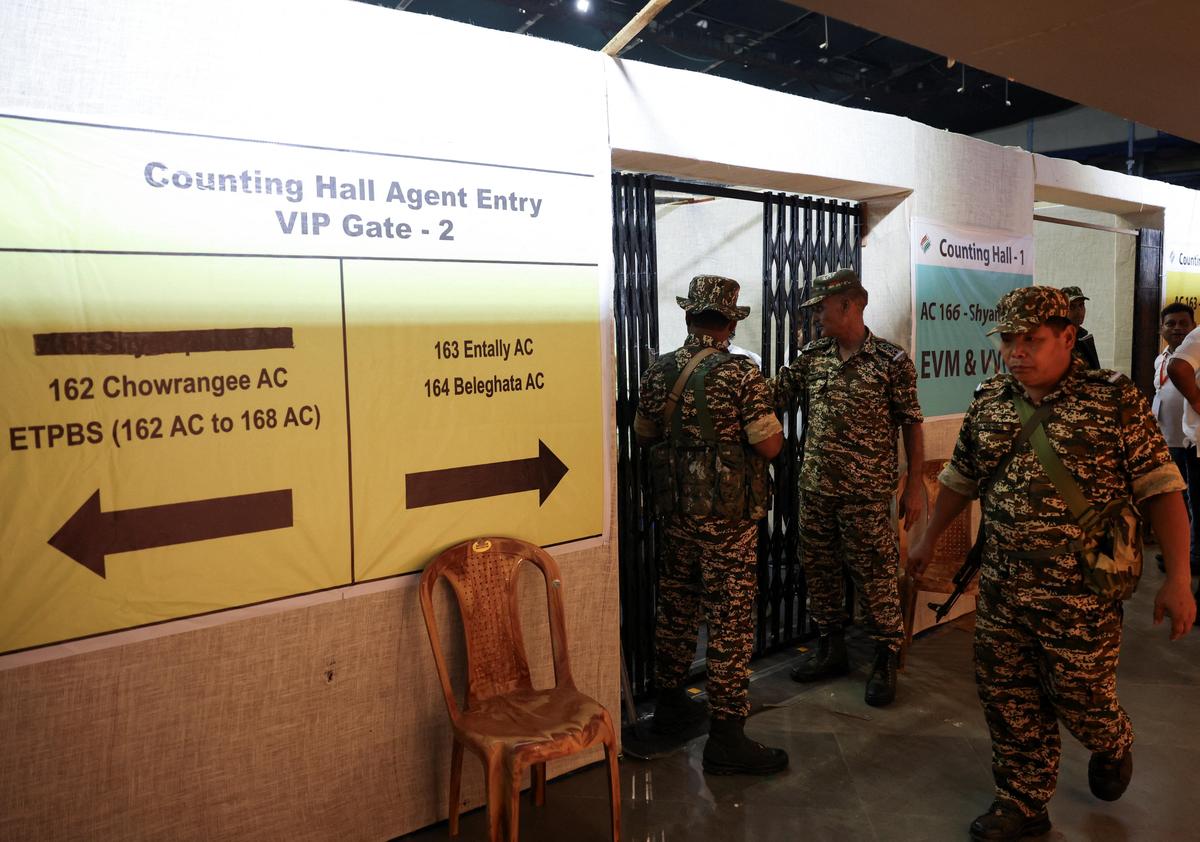
The Numbers That Tell the Story
The 2026 West Bengal Assembly elections produced results that reshaped the state’s political map:
- BJP: Won 114 seats and leading in 92 — a massive increase from their previous tally
- Trinamool Congress (TMC): Won 47 seats with 34 leads — a significant decline from their 2021 performance of 215 seats
- Indian National Congress: Won 2 seats — marking their return to the Bengal assembly
- Aam Janata Unnayan Party: Won 2 seats
- CPI(M): Leading in 1 seat
The BJP’s performance represents one of the most dramatic electoral turnarounds in recent Indian political history, transforming the party from a distant challenger to the dominant political force in the state.
Key Constituencies and Their Stories
Bhabanipur: The High-Profile Battleground
The Bhabanipur constituency witnessed one of the most closely watched contests in Indian electoral history. Chief Minister Mamata Banerjee faced off against Leader of Opposition Suvendu Adhikari in a battle that symbolized the broader political shift in the state.
The contest saw intense back-and-forth as counting progressed, with both candidates taking leads at different stages. The narrow margins throughout the counting process reflected the intense polarization and competitive nature of Bengal politics.
Nandigram: Suvendu Adhikari’s Stronghold
Suvendu Adhikari, the BJP’s face in West Bengal, contested from both Nandigram and Bhabanipur, demonstrating the party’s confidence in his leadership. His dual candidacy highlighted the BJP’s strategic positioning and Adhikari’s emergence as the primary challenger to Mamata Banerjee’s dominance.
Medinipur: A Decisive Victory
Sankar Kumar Guchhait won the Medinipur seat with a margin of over 38,000 votes, wresting control from the TMC. This victory in a traditionally significant constituency signaled the BJP’s growing influence across different regions of the state.
Darjeeling: Retaining the Hills
The BJP retained the Darjeeling constituency, with Noman Rai winning with a margin of over 6,000 votes. This victory in the hills region demonstrated the party’s continued stronghold in areas with significant Gorkha population.
Kalimpong: A Notable Win
Bharat Chetri, former captain of the Indian Hockey team, made his political debut by winning Kalimpong with a margin of over 21,000 votes, defeating the incumbent from the Bharatiya Gorkha Prajatantrik Morcha. His victory represented the BJP’s ability to attract prominent personalities and expand its base.
Asansol Dakshin: Agnimitra Paul’s Triumph
Agnimitra Paul retained the Asansol Dakshin seat by defeating TMC’s Tapas Banerjee by a substantial margin of 40,839 votes. This victory in the industrial belt of Asansol highlighted the BJP’s appeal among urban and working-class voters.
Jamuria: Dr. Bijan Mukherjee’s Victory
Dr. Bijan Mukherjee won the Jamuria constituency with a margin of over 22,000 votes, unseating the incumbent TMC candidate Hareram Singh. This win in the coal belt region demonstrated the BJP’s penetration into traditional TMC strongholds.
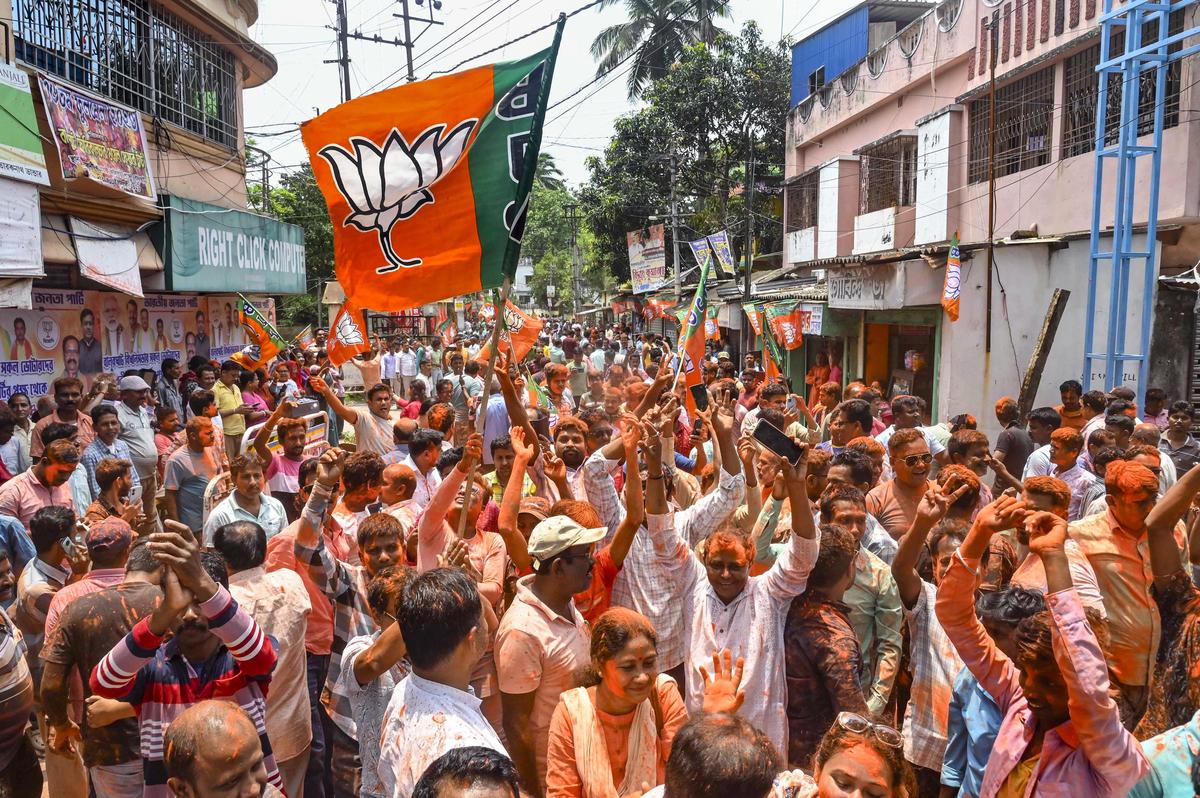
Voices of Victory
Prime Minister Narendra Modi
“The 2026 West Bengal Assembly Elections will be remembered forever. People’s power has prevailed and BJP’s politics of good governance has triumphed. I bow to each and every person of West Bengal.”
Home Minister Amit Shah
“For every BJP worker like me, this is a moment of pride that from the source of Mother Ganga in Gangotri to Gangasagar, today the BJP’s saffron flag is proudly waving everywhere.”
Bengal BJP Chief Samik Bhattacharya
“The final result is yet to come, but what trend we are seeing so far, one thing is clear — a BJP government is going to be formed with a huge majority. Our appeal to all workers is to maintain peace.”
What Drove the BJP’s Victory?
1. Organizational Resilience
The BJP’s journey in West Bengal has been marked by persistence. From winning just 18 seats in the 2019 Lok Sabha elections to facing setbacks in 2021, the party continued to build its organizational structure across the state. This election proved that their groundwork finally paid off.
2. Ideological Connection
West Bengal holds special significance for the BJP as the birthplace of Syama Prasad Mookerjee, founder of the Jana Sangh, the party’s predecessor. The victory represents the fulfillment of a long-held ideological aspiration — establishing the party’s presence in a state that has been central to its political narrative.
3. Governance Promise
The BJP campaigned on a platform of development, law and order, and administrative reform. The promise of “good governance” resonated with voters who were seeking alternatives to the existing political establishment.
4. Strategic Candidate Selection
The party fielded candidates with diverse backgrounds — from sports personalities like Bharat Chetri to medical professionals like Dr. Bijan Mukherjee. This approach helped the BJP connect with different segments of Bengal’s electorate.
5. Voter Engagement
The record-breaking turnout of 92.93% indicated unprecedented voter engagement. The BJP successfully mobilized its supporters while also attracting voters who were looking for change.
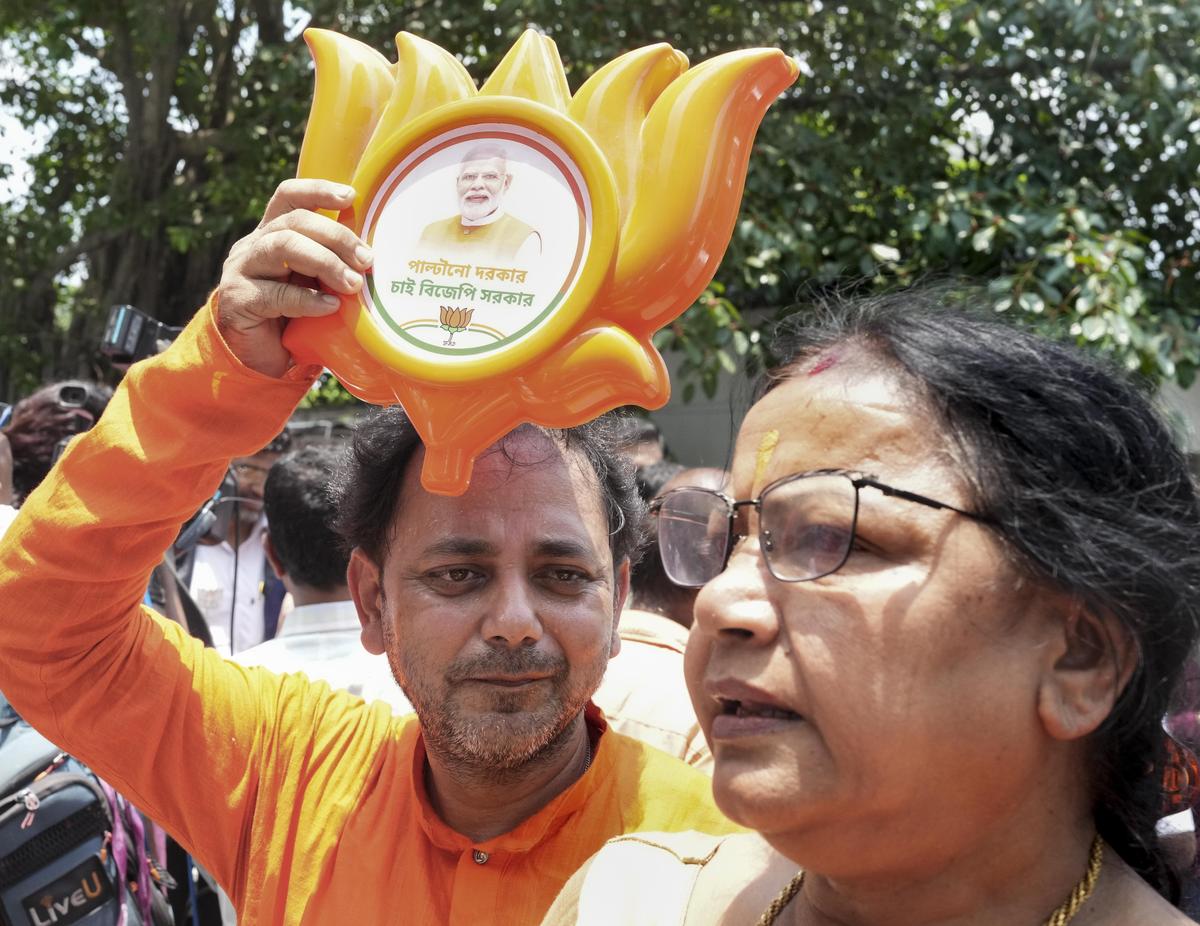
The Road Ahead for West Bengal
As the BJP prepares to form its first-ever government in West Bengal, the state stands at a crossroads. The new government will face several challenges:
- Administrative Transition: Managing the smooth transfer of power after 15 years of TMC rule
- Law and Order: Addressing concerns about political violence that has marked Bengal’s recent history
- Economic Development: Accelerating industrial growth and job creation in the state
- Social Harmony: Maintaining the state’s tradition of communal amity while implementing the new government’s agenda
- Federal Relations: Navigating the relationship with the central government, which is now led by the same party
Conclusion: A New Chapter Begins
The 2026 West Bengal elections represent more than just a change of government — they signify a fundamental shift in the state’s political identity. The BJP’s victory, built on years of persistent organizational work and strategic planning, opens a new chapter in Bengal’s political history.
As the state prepares for its first BJP government, the expectations are high and the challenges significant. The new government will need to deliver on its promises of development and good governance while maintaining the cultural richness and social harmony that defines West Bengal.
For the BJP, the victory represents the completion of a political project that began decades ago — establishing the party’s presence in a state that has been ideologically significant since the days of Syama Prasad Mookerjee. From Gangotri to Gangasagar, the saffron flag now waves proudly across the political landscape of West Bengal.
May 4, 2026 — A day that will forever be remembered as the dawn of a new political era in West Bengal.
Sources and Credits
- Election data sourced from [The Hindu](https://www.thehindu.com) election coverage, May 4, 2026
- Historical context from Wikipedia articles on West Bengal politics and BJP
- Images courtesy of PTI and Reuters via The Hindu, used for editorial representation
- Quotes attributed to respective speakers as reported in media
- Election Commission of India official data
About the Author: This article celebrates the democratic process and the will of the people of West Bengal. It aims to provide factual coverage of the election results and their significance.