
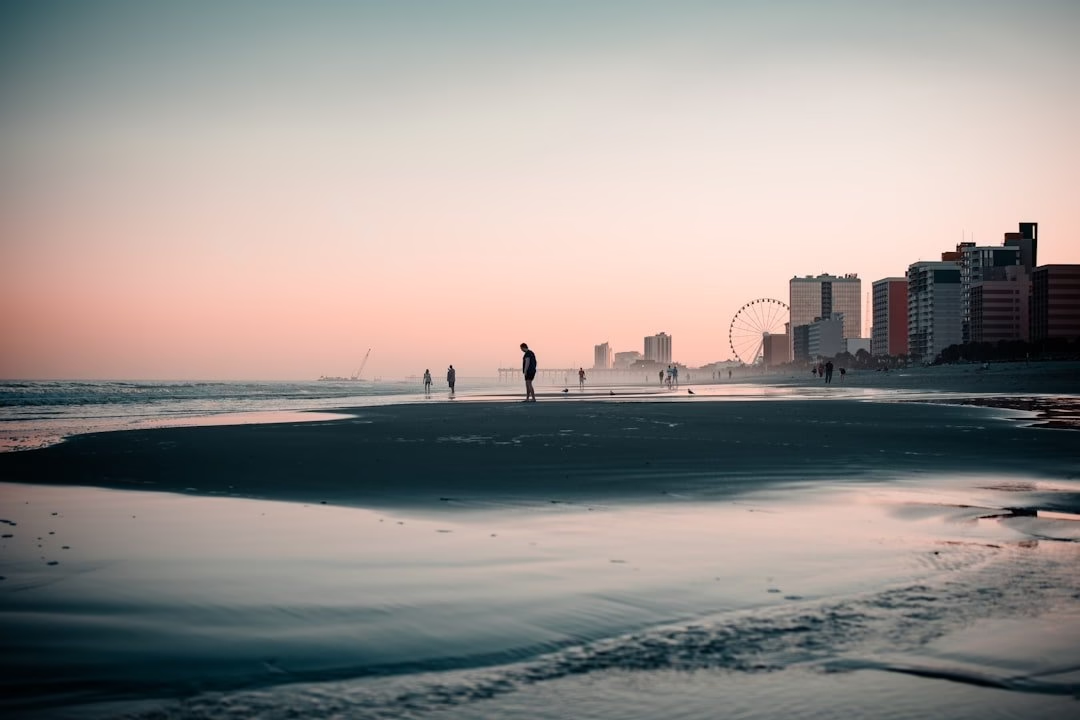
The Shore at Six in the Morning
Before the rental chairs go out and the family tents claim their squares of sand, Myrtle Beach belongs to the pelicans and the joggers. The Atlantic sits flat and grey-green at first light, the smell of salt and low-tide kelp carrying inland to the motels along Ocean Boulevard. By nine, the Grand Strand — the 60-mile arc of coastline that anchors this stretch of South Carolina — is already filling. By noon, if you haven’t staked your spot, you’re picking your way around coolers and umbrellas just to reach the water. That’s the honest shape of a summer visit here.
Why Myrtle Beach Is Worth Talking About Right Now
According to a May 2026 report from Tripadvisor cited by The State, South Carolina holds the most sought-after summer travel destination in the country for 2026 — and that means Myrtle Beach and the surrounding Grand Strand are heading into peak season with more national attention than usual. This isn’t a sleeper moment; it’s the opposite. The recognition follows a broader pattern: Travel And Tour World reported in May 2026 that California leads overall U.S. visitor spending growth, but coastal destinations throughout the South are pulling strong numbers, particularly for summer family travel.
The practical consequence is simple — if you’re planning a summer visit, book accommodation earlier than you think necessary. Beachfront properties within a half-mile of the water in Myrtle Beach itself were commanding rates above $250 per night for July weekends as of spring 2026, according to publicly available listings. The shoulder weeks of early June and late August remain meaningfully cheaper and far less crowded.
What to Know Before You Go
Myrtle Beach sits on the northeastern South Carolina coast, roughly 90 miles northeast of Charleston and about 75 miles south of Wilmington, North Carolina. The nearest major airport is Myrtle Beach International (MYR), served by direct flights from dozens of East Coast and Midwest cities — Spirit, American, and Southwest all run seasonal routes. Driving is common; the city sits just off U.S. Route 17 and Highway 31.
The Grand Strand stretches from Little River in the north down through Myrtle Beach proper, then continues south through Murrells Inlet and Pawleys Island — two areas with a notably different feel from the main strip. Murrells Inlet is where most of the serious seafood restaurants concentrate, along a tidal marsh walkway. Pawleys Island is quieter, with a barrier island character and far fewer chain restaurants.
Summer temperatures sit between 85°F and 95°F with high humidity. Afternoon thunderstorms are common from June through August — plan beach time for mornings. The currency is U.S. dollars; no language considerations apply. Parking in central Myrtle Beach costs between $3 and $5 per hour at city-managed lots.
What to Actually Do
The beach itself is the obvious anchor, and it delivers what it promises: wide, flat sand, warm water (averaging around 82°F in July), and easy access. The stretch north of 38th Avenue tends to be less compressed than the blocks directly behind the resort towers near the Boardwalk. If you’re visiting with kids, the Boardwalk area between 9th and 14th Avenues North is compact and walkable, with carnival food and a SkyWheel observation ride — fine for an evening, though the commercial density gets thick fast.
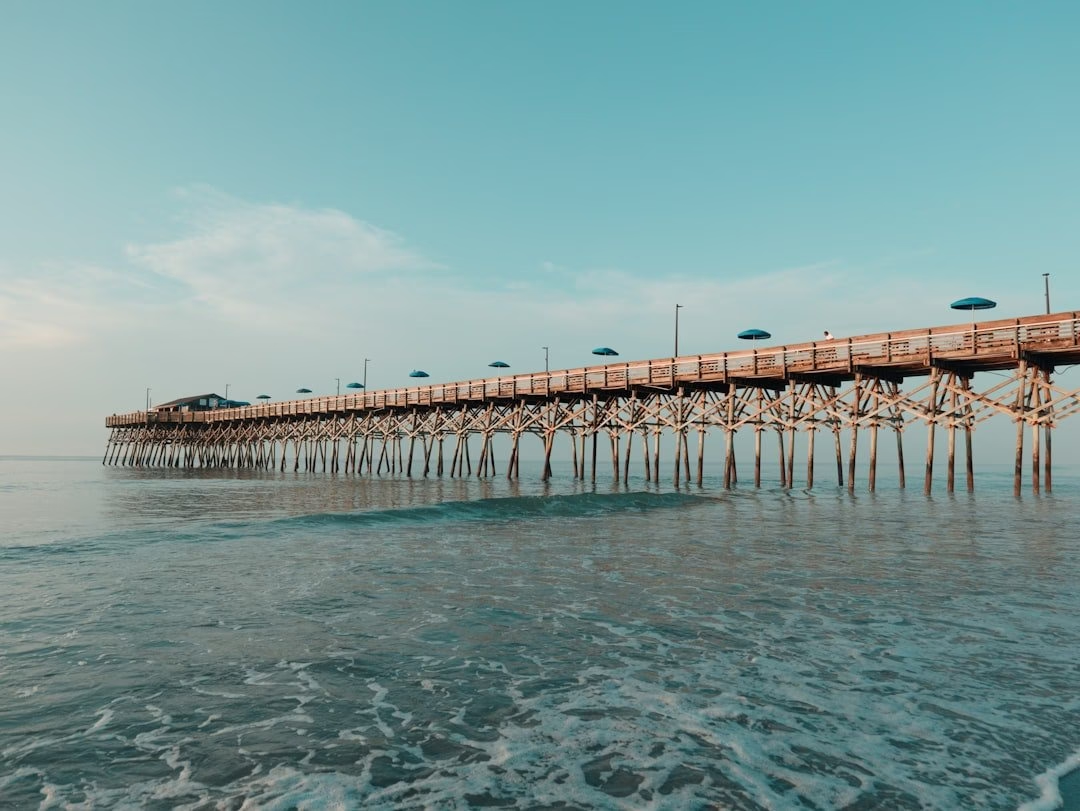
Murrells Inlet, about 15 miles south on Route 17, is worth the drive specifically for the marsh walk. A string of waterfront restaurants lines the inlet — the smell of charcoal and shrimp carries across the docks in the evenings — and the tidal views are genuinely different from anything on the main strip. This is also where you’ll find more of the local fishing boat infrastructure, with several operators running half-day offshore trips starting around $60 to $85 per person.
Brookgreen Gardens, another 5 miles south of Murrells Inlet, is an unexpected detour that holds up: a former rice plantation converted into a sculpture garden and wildlife preserve spanning over 9,000 acres. Admission runs around $20 for adults as of 2026. It’s not loud, it’s not particularly crowded on weekday mornings, and it gives a different texture to what can otherwise become a purely beach-and-restaurant trip.
Pawleys Island, the southernmost point of the Grand Strand at roughly 25 miles from central Myrtle Beach, has a barrier island with public beach access and almost none of the commercial noise of the main strip. The drive over the causeway alone signals the change — marshgrass on both sides, osprey nests on the channel markers. Park near the public access points at the north or south ends of the island and walk.
What to Skip
Broadway at the Beach, the 350-acre entertainment complex near the center of Myrtle Beach, is genuinely not worth your time unless you have children under ten who are specifically asking for it. The restaurants are chain operations with resort-level pricing — expect $18 to $25 for a burger — the crowds in summer are dense, and the appeal is purely commercial. The waterway views from its perimeter are pleasant enough, but you can see those from the parking lot. The hours you’d spend there are better spent in Murrells Inlet or at Brookgreen.
The same applies to the string of mini-golf courses and souvenir shops along Kings Highway (Business Route 17) through central Myrtle Beach. If you’re already driving through, fine. Building an afternoon around them is a mistake.
Practical Notes
No visa required for U.S. citizens or permanent residents; international visitors should verify current U.S. entry requirements before traveling, as requirements change. The sources cited do not flag specific safety concerns for Myrtle Beach at the time of writing, though the city does have documented issues with traffic congestion on Ocean Boulevard and Route 17 during peak summer weeks — budget extra time for any driving between 4 and 7 p.m.
Cost level: mid-range to expensive during July, moderate in early June and late August. Expect to spend around $150 to $180 per night for a decent motel room not directly on the beach in peak season, and $250 or more for oceanfront. Meals at sit-down restaurants in Murrells Inlet typically run $20 to $40 per person without drinks.
The best time to visit is the last two weeks of May or the first two weeks of September — school is in session in most states, prices drop noticeably, and the water is still warm. Tripadvisor’s summer designation will bring more visitors through July and August 2026 than the area has seen in recent years. That’s worth factoring into your planning honestly, not treating as a reason to rush.